Wednesday, 10 July 2013

Pure by Andrew Miller

On a lovely sunny evening 7 of us sat in the garden, drinking chilled white wine, nibbling cheese and discussing the grotesque ‘goings on’ in a redundant 18th Century Parisian Cemetery just before the French Revolution.

The evening summer garden sights, sounds and smells were a far cry from the smell of death and the ghastly gases, that Andrew Miller so eloquently enabled us to imagine while reading, 

We liked the book. From reviews and recommendations it may come as surprise to hear that our response wasn't ‘gushing’ with enthusiasm or excitement. But we did really like it. For a book group this is a good read: there is plenty to reflect upon in the story and the quality of the writing keeps a reader going.

It is a beautifully written book and Andrew Miller has the ability to write descriptions that draw the reader into the scene and situation.

The story takes a while to get going, it is a bit drawn out and one member of our group admitted that she ‘just couldn't wait for it to stop’. That said the story carries the reader along, you want to know what happens next, you are waiting for the twist, wanting to know more about each of the characters and, ultimately, you are dying to find out whether the task is achieved.   

When reflecting on the characters we realised that so many people, representing so many different facets of French society at the time, had been introduced to us. All were a little mad which is not surprising given their situation and surroundings. From these the people who most stand out are:
  • Jeanne - a young girl so good and kind - she epitomises her home at Les Innocents and the book title.
  • Heloise – a prostitute who is just not what you expect.
  • Andre – who could have tipped the balance for Jean-Baptiste (the lead character) but didn’t and was probably more preoccupied with his gang of revolutionaries and their activities.
  • Dr Guillotin – some of us were surprised to have met someone of such notoriety!
  • Jan Block – for loving Jeanne as much as we did.

Above all we were all pleased about how things turned out for the young engineer, Jean-Baptiste.

We did all wonder if the places in the book, and the actions taken at Les Innocents are in any part true? Perhaps someone can enlighten us at our next meeting. 

Would we recommend this book? Yes. This is a book to talk about with friends.


Our next book is The Hundred-Year-Old Man Who Climbed Out the Window and Disappeared by Jonas Jonasson. We will return to The HUNDRED of Ashendon (formerly the Gatehangers' Inn) to discuss this book on THURSDAY 12th September at 8pm. Mary has kindly offered to 'host'.

Monday, 1 July 2013

July 2013 - Book Choices

Our next meeting is on Tuesday 9th July, 8.30 pm at Sian's house (I've made it a little bit later as will be dashing in at 8.15). We will be discussing Pure by Andrew Miller


Choices for our next book are: 


The Light Between Two Oceans by M L Stedman

After four harrowing years on the Western Front, Tom Sherbourne returns to Australia and takes a job as the lighthouse keeper on Janus Rock, nearly half a day’s journey from the coast. To this isolated island, where the supply boat comes once a season and shore leaves are granted every other year at best, Tom brings a young, bold, and loving wife, Isabel. Years later, after two miscarriages and one stillbirth, the grieving Isabel hears a baby’s cries on the wind. A boat has washed up onshore carrying a dead man and a living baby…


The Hundred-Year-Old Man Who Climbed Out the Window and Disappeared by Jonas Jonasson

Allan Karlsson is about to celebrate his hundredth birthday and a birthday party is planned at his retirement home. Allan is alert despite his age, but not so interested in the party. Instead he steps out the window and disappears. He gets hold of a suitcase of drug money and becomes chased by both drug dealers and the police.

Filled with lots of adventures, Allan's life story is told in parallel to this. He eats dinner with the future President Harry S. Truman, hitchhikes with Winston Churchill, travels on a riverboat with the wife of Mao Zedong and walks across the Himalayas on foot. Lighthearted and  amusing.

Dangerous Liaisons by Pierre Choderlos De Laclos

Two former lovers embark on a game of seduction and manipulation to bring amusement to their jaded existences. While the Marquise de Merteuil challenges the Vicomte de Valmont to seduce an innocent girl, the Vicomte is also occupied with the conquest of a married woman. But the consequences prove to be more serious, than they could have guessed.

An epistolary novel – foppish, French and ferocious.


Monday, 17 June 2013

Ashendon's Got Authoring Talent

Ashendon's very own Geoff Pimm has recently published a paperback called 'The Giggle Band' which is available on Amazon (and Kindle).

Geoff's wife, and Ashendon Book Group member, Ruth advises that his book started as a brief history for the family but developed into a tale of a London boy growing up after the war. Having been lucky enough to preview the book, Ruth tells us: 
It is autobiographical but is also a pacy and amusing 'then and now' comparison.  It is a good read and the alien world could be quite an eye opener for the younger generations!
To support our local writer please go to Amazon now and sign up for advance notification of availability.

Ruth has another literary connection in her sister-in-law who publishes light hearted mysteries under the name of Nicola Slade. So far she has written 5 books and is developing a series with the same heroine.  Ruth recommends these books as 'quick escapist reads'.  All are available on Amazon and they will be available for Kindle in the next  few weeks. You can find out more at www.nicolaslade.com

Monday, 20 May 2013

A Young Doctor’s Notebook by Mikhail Bulgakov

The Notebook has seven short stories based on the notes of a young Russian doctor (Bulgakov) and then a second book ‘Morphine’ describes the experience of another young (though we believe fictitious) doctor yet possibly based on Bulgakov’s own experience.

Some of our group were initially concerned about the subject thinking it might be full of the blood, guts and gore of the operating theatre. Their fears turned out to be unfounded and the book was, in fact, an excellent account of life in rural Russia at the start of the last century.

Bulgakov uses plain language to great descriptive effect. He makes excellent, often humorous, descriptions that are genuine and authentic.  He shares his own concerns in an honest, straight-forward style and leaves the reader a little more able to imagine what life must have been like for Russian peasants. Particularly striking are his descriptions of the harsh winter weather and blizzard conditions a doctor would have to travel in to make emergency calls.

Morphine is more haunting than the Notebook and some of the group found it quite boring as it ‘goes on a bit’.

Because each member of our group sources their own copy of each book we read we can have quite an array of different editions when a classic book is chosen. For this book we had two different translated versions. The original translation (A Country Doctor's Notebook) was much straighter in its language than The Young Doctor's Notebook so, for example: The Embroidered Towel became The Towel with the Cockerel Motif.

Despite the differences both versions of the book leave the reader feeling that Mikhail Bulgakov was a conscientious, compassionate man who had a great willingness to learn and was humble and intelligent enough to know when to take advice from others in his team who had more experience.  

Would we recommend this book? Yes, definitely although possibly not for a book group choice as it doesn't lead to extensive discussion.

Our next book and meeting are: Pure by Andrew Miller which we will be discussing on at 8.15pm on Tuesday 9th July. We hope to meet at Gatehangers as usual but that will depend on the new landlords. Sian will host and we will confirm venue with the next book choice. 


Saturday, 11 May 2013

May 2013 Book Choices


Pure by Andrew Miller

A year of bones, of grave-dirt, relentless work. Of mummified corpses and chanting priests. A year of rape, suicide, sudden death. Of friendship too. Of desire. Of love... A year unlike any other he has lived.
Deep in the heart of Paris, its oldest cemetery is, by 1785, overflowing, tainting the very breath of those who live nearby. Into their midst comes Jean-Baptiste Baratte, a young, provincial engineer charged by the king with demolishing it. At first Baratte sees this as a chance to clear the burden of history, a fitting task for a modern man of reason. But before long, he begins to suspect that the destruction of the cemetery might be a prelude to his own.


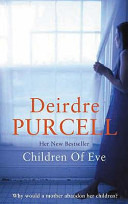
Children of Eve by Deirdre Purcell

Eve Moraghan broke one of the great taboos when she abandoned her children as toddlers. Now adults, Arabella, Willow and Rowan have heard nothing of their mother since the day she walked out the door, headed no one knows where. Why she went, they just don't know. But now, it seems, they're about to find out. Their mother's been in an accident, and she's sent word that she wants to see her children. The first reaction is to tell her to forget it. She gave up on them - why should they jump when she says so? And yet somehow they each find themselves on that plane, making the journey that will tell them what their past was all about - and open new doors into the future.


Salt by Jeremy Page

“The mud swelled and shrank round the house, dislodging the tiles on the roof and knocking the chimneypot on the huh, as they say in Norfolk. Inside, the floor buckled on imaginary tree roots.” This is the house in which Goose lives, in which her daughter, Lil’, is born, and which Pip, the narrator of Jeremy Page’s novel Salt, comes to know when he runs away from his father. Built on uncertain ground, it is a fitting home for this family of marsh folk. “It ain’t right,” says a friend much later in the novel, “livin’ on land that ain’t really land at all.”
Pip tells the story of three generations of his family, but the telling is itself an uncertain enterprise, connected as it is to the land on which it takes place, a salt marsh on the North Sea coast of England and covering events he did not witness. He must rely on the stories of others, especially his grandmother Goose, with whom the tale begins—but how much is story? How much is fact? How much is true?
 
Hope to see you at our next meeting when we will choose our next book - Tuesday 14th May, 8.15pm at Gatehangars.

Wednesday, 8 May 2013

Wolf Hall by Hilary Mantel

Wolf Hall by Hilary Mantel

It’s fair to say the group was split.

“I liked it” came a defiant cry from the corner as our group sat down to discuss this book.

“Why?” asked the less than impressed.

So, with gloves off, our discussion began.

Those who enjoyed this book cited their enjoyment of the subject matter. Those who didn't get what was so great about it felt life is too short!

“I expected to be irritated by the third person present tense.” Said one member of our group – “I was” said Felicity. We all agreed it is written in a confusing style.

One suggestion was to read this book in big chunks because it is very get ‘in-to-able’ – I couldn't get ‘in-to-it at all’ was the 'no' team retort.

After the initial dispute we got into some serious chat around the story. We agreed it is in an interesting subject tackled from an interesting angle. It was a good picture of life at the time and gave insight into aspects of life such as the annual plague.

Thomas, an impressively self-made man, seemed to be a good family man and got on with most people, despite his harsh start in life and it didn't feel like his loyalty to others was for his own gain or for his family to climb the ladder. Unlike (for example) the Boleyn family.

But, there were far too many Thomas’ in the story. Oh and Marys’ and Henrys’ but I don’t think we can hold that against the author as they were all real people.

“There are some funny bits and some humour” – that was the only positive comment one member could make.

Of our group (of nine) two had finished the book and two intended to do so. It is an acquired taste. It’s not a page turner and most of us won’t bother reading another Hilary Mantel book.

Enough said I think. Our next meeting is on 14th May when we will be discussing A Young Doctor's Note Book by Mikhail Bulgakov.

Friday, 15 March 2013

March 2013 - Next Meeting

It was so lovely to discuss our next meeting as it reminded us all that Spring is just round the corner.

Our next meeting will be on Tuesday 14th May, 8.15pm at Gatehangers. Isalda has kindly offered to 'host'.

We will be discussing A Young Doctor's Notebook by Mikail Bulgakov.

We found it a tough choice between this book and Year of Wonder by Geraldine Brooks so if anyone wants to read this book as well I, for one, am up for a bit of additional reading.

Notes from our discussion about Wolf Hall will follow.