Showing posts with label Book Group Meeting. Show all posts

Tuesday, 26 March 2024

The White Lady by Jacqueline Winspear

8 of us met to discuss this 1947 novel based around the life of Elinor White.

Elinor White has a seemingly solitary, quiet life in a grace-and-favour cottage in the Kent countryside where she is known locally as 'the White lady' – her community is unaware of her background (a veteran of two world wars, a trained killer and former intelligence agent).

The story ‘time jumps’ between Elinor’s war years and her new life, where she is drawn into using her skills to help a local family troubled by one of the most dangerous crime families in London.

Most of the group ‘enjoyed’ this read but one did not like it at all stating that she ‘hated’ it! another said that she whistled through the book and found it so gripping that she almost missed her train stop!

So, we explored our reading experience based on shared differences! Why did we have such a divided love/hate relationship with this book?

What did we like? The historical context was interesting and thought-provoking. The story brings insight into the SOE (Special Operations Executive), and what women and children did to support their wartime efforts. It was surprising to learn how extensive the SOE activities were in Belgium. The visualisation of the characters and their situations was excellent. 

What didn’t we like? The writing was clumsy and somewhat ‘trite’. “A Boy's Own annual ‘jolly hockey sticks’ story, written by someone who was trying to write like someone in the 1940s!". The ending was weak: a ‘fairy tale’ unreal, romanticised outcome that grated with the reality of the rest of the story.

Would we recommend this book? Well, it was an interesting book, not particularly well written, but if you are looking for a good read and are prepared to accept it for what it is, then yes.

Our next book is On Earth We're Briefly Gorgeous by Ocean Vuong, we will meet on Thursday 16th May, at 8pm to discuss. Sarah will host. 

Sunday, 21 August 2022

The Vanishing Act of Esme Lennox - Maggie O'Farrell

8 of us met to discuss our feelings about this book.

Surprisingly most of us had read this book before, and not one of us had remembered much of the story told. Perhaps it is a subject that brains choose not to retain. it is, after all, heart-rending.

The mystery of how so many of us had read the book before was cleared when Hilary showed us her book -10 years ago, I shared this book when I was given World Book Day copies to distribute.: 

We really enjoyed reading this book and those who had read it before felt it was a different reading experience the second time read. Why? We couldn’t put into words. Are we more aware of mental health issues? did we focus on different aspects of the situation? does the second read come with more understanding? Whatever it was we felt it was not wasted time (even for those of us who rarely re-read books). 

We spent time discussing whether the action taken at the very end of the book was justified. Given the circumstances with which it came about, we mostly felt it probably was. 

Of the characters: 
Esme was quirky, spirited, traumatised, misunderstood (in a terrible way) and absolutely didn’t deserve what happened to her and how she was subsequently treated. We were left angry and horrified by her story. 

Iris was a wonderful woman put into a very difficult situation and we felt sorry for her for that, but we also felt ‘proud’ of her for the decision she made when faced with a very human dilemma. 

We loved the construct of the story – how it developed the characters, how it went back and forth to the past and how dementia was portrayed. There were surprises at every turn. 

The story showcases the cruelty of the past. We did question whether it really is in the past, or whether what happens today can be equally as cruel to people like Esme. One of our members recalled a Woman’s Hour guest telling the story of her son who, through no fault of hers, was in a similar (more modern) predicament to Esme and, she said, there is seemingly nothing she can do to get him out of the situation.

This led us on to the subject of the closure of institutions and how people have been treated in the past vs. today and the language and the attitudes toward people who just don’t fit with the social norm. Certainly, what happened in the past was often very wrong but, we wondered, is what happens now much better? 

Would we recommend this book? Most definitely we would, and suggest you read it twice!

Our next book was selected from three recommended by a friend. All three are books written by her author friends. It was a difficult choice so we decided to go for what we hope will be a ‘light-hearted’ good read: The Hound in the Left-Hand Corner by Giles Waterfield which we will discuss at 8pm at The Hundred on Thursday 27th October. 

Monday, 28 March 2022

The Paying Guests by Sarah Waters

I am more than a little embarrassed for the time it has taken to summarise our thoughts on this book. In all honesty, I struggled to put pen to paper because I did not enjoy this read AND I failed to finish the book. Usually, when I feel that way, other members of our group offer points of view that help me to find a way to represent the thoughts and feelings of us all and to offer a balanced review of our discussion. I just couldn't find a way to do that, this time. 

So here is a list of the comments made at our meeting back in January in which nine of us sat down to a (short) chat about this read.

What did we feel about this book? "It wasn't doing anything for me." "I stopped reading, it was a waste of my time." "I kept going and I did enjoy it in the end." "I had to force myself to read it." "It could have been 100 pages shorter."

What about the story? "A weak and predictable plot." "It was unrealistic, I lost the plot." "I went up and down those stairs too many times!" "I didn't think it was authentic."

Which characters did we like? "I didn't care about any of the characters."

Any redeeming features? "I was a social commentary, the breakdown of class after WW1, the fall of the 'gentile woman' BUT then it turned into a costume drama!", "A well-bred woman was doing the work of a 'char'." "The elderly Victorian gentry were having to change." "Lodgers were paying guests without rules - that's how the upper-class could justify their fall from grace." "It was well written." "We have read worse!"

That's it - sorry Sarah Waters, of Tipping the Velvet fame, you didn't add much value to our lives with this book. 

On the bright side, we can shut the door on that book and move on to our next read The Vanishing Half by Brit Bennett and look forward to discussing that on Thursday 31st March, 8pm at The Hundred. 

Monday, 17 January 2022

Book choices to kick off 2022

The Vanishing Half by Britt Bennett

The Vignes twin sisters will always be identical. But after growing up together in a small, southern black community and running away at age sixteen, it's not just the shape of their daily lives that is different as adults, it's everything: their families, their communities, their racial identities. Many years later, one sister lives with her black daughter in the same southern town she once tried to escape. The other passes for white, and her white husband knows nothing of her past. Still, even separated by so many miles and just as many lies, the fates of the twins remain intertwined. What will happen to the next generation, when their own daughters' storylines intersect?

Weaving together multiple strands and generations of this family, from the Deep South to California, from the 1950s to the 1990s, Brit Bennett produces a story that is at once a riveting, emotional family story and a brilliant exploration of the American history of passing. Looking well beyond issues of race, The Vanishing Half considers the lasting influence of the past as it shapes a person's decisions, desires, and expectations, and explores some of the multiple reasons and realms in which people sometimes feel pulled to live as something other than their origins.

Educated by Tara Westover

Tara Westover was 17 the first time she set foot in a classroom. Born to survivalists in the mountains of Idaho, she prepared for the end of the world by stockpiling home-canned peaches and sleeping with her "head-for-the-hills bag". In the summer she stewed herbs for her mother, a midwife and healer, and in the winter she salvaged in her father's junkyard.

Her father forbade hospitals, so Tara never saw a doctor or nurse. Gashes and concussions, even burns from explosions, were all treated at home with herbalism. The family was so isolated from mainstream society that there was no one to ensure the children received an education and no one to intervene when one of Tara's older brothers became violent.

Then, lacking any formal education, Tara began to educate herself. She taught herself enough mathematics and grammar to be admitted to Brigham Young University, where she studied history, learning for the first time about important world events like the Holocaust and the civil rights movement. Her quest for knowledge transformed her, taking her over oceans and across continents, to Harvard and to Cambridge. Only then would she wonder if she'd traveled too far, if there was still a way home.

The Henna Artist by Alka Joshi

Vivid and compelling in its portrait of one woman’s struggle for fulfillment in a society pivoting between the traditional and the modern, The Henna Artist opens a door into a world that is at once lush and fascinating, stark and cruel.

Escaping from an abusive marriage, seventeen-year-old Lakshmi makes her way alone to the vibrant 1950s pink city of Jaipur. There she becomes the most highly requested henna artist—and confidante—to the wealthy women of the upper class. But trusted with the secrets of the wealthy, she can never reveal her own…

Known for her original designs and sage advice, Lakshmi must tread carefully to avoid the jealous gossips who could ruin her reputation and her livelihood. As she pursues her dream of an independent life, she is startled one day when she is confronted by her husband, who has tracked her down these many years later with a high-spirited young girl in tow—a sister Lakshmi never knew she had. Suddenly the caution that she has carefully cultivated as protection is threatened. Still she perseveres, applying her talents and lifting up those that surround her as she does.

We will meet on Thursday 20th January, 2022 at 8pm in The Hundred of Ashendon to discuss our reading experience of The Paying Guests by Sarah Waters.

Tuesday, 26 October 2021

Book choices to see us into Winter

The Tenderness of Wolves by Stef Penney

The novel opens with the discovery of the murder of a French trapper and trader named Laurent Jammet. Mrs Ross, the protagonist and first-person narrator of the novel, finds the mysterious trapper in his isolated cabin on the outskirts of a settlement called Dove River. Mrs Ross brings the murder to the attention of the town's magistrate, Andrew Knox, who then calls upon the Hudson's Bay Company to investigate the murder. This brings three men from the Company to Dove River: Mackinley, the leader, Donald Moody, an accountant, and Jacob, a native guide who works for the company and who has named himself Moody's personal protector. Mrs Ross’ son, Francis, also
goes missing on the day that Jammet is found.

News of Jammet's unfortunate end travels south as well, bringing it to the attention of Thomas Sturrock, a former journalist and retired searcher whose talents have endeared him to many Indian tribes. His interest in Jammet concerns not so much the man himself but what he possessed. Specifically, Jammet had a small bone tablet with unidentified markings on it in which Sturrock was extremely interested. Sturrock did not have the funds, at the time, to buy it from Jammet, who promised to keep the tablet safe until Sturrock could afford it. Once he hears of the murder, however, Sturrock sets off for Dove River, hoping to discover the fate of the tablet.

The mix of people concerned with the death further expands with the addition of William Parker, who is a half-Native American trapper. Initially, he is suspected of having committed the murder and subsequently detained. He is soon released, however, and then becomes Mrs Ross's guide in her quest to find her son.

Once all of these characters have been introduced, the novel then follows their respective journeys—and the discoveries they make along the way—through land gripped by winter.

The Paying Guests by Sarah Waters

London is tense. Ex-servicemen are disillusioned; the out-of-work and the hungry are demanding change. And in South London, in a genteel Camberwell villa—a large, silent house now bereft of brothers, husband, and even servants—life is about to be transformed, as impoverished widow Mrs Wray and her spinster daughter, Frances, are obliged to take in lodgers.

With the arrival of Lilian and Leonard Barber, a modern young couple of the “clerk class,” the routines of the house will be shaken up in unexpected ways. Little do the Wrays know just how profoundly their new tenants will alter the course of Frances’s life—or, as passions mount and frustration gathers, how far-reaching, and how devastating, the disturbances will be.

Star of The North by David B John

North Korea proves an enigmatic, startling stage for D.B. John’s assured tale of a CIA deep-cover agent, prepared to risk it all to find her missing twin.

He’s a survivor, playing a poor hand with great skill. His weapons keep him safe from us. Hunger keeps him safe at home. His people think only of where their next meal is coming from, not of rebellion. And he’ll kill as many of them as it takes to stay in power. 

America and North Korea stand on the verge of war.

Enlisted by the CIA, Korean-African American academic Jenna Williams is sent undercover on a perilous mission to infiltrate a terrifying plot at the heart of the regime; a plot to kidnap and engineer home-grown assassins and spies to deploy in the west. For Jenna, it’s a mission that comes with a personal agenda and a heavy cost: that of her own kidnapped twin sister.

As Jenna begins a desperate and dangerous search, John interweaves parallel tales of an ordinary North Korean citizen and the country’s disgraced elite as the webs of deception grow ever-tighter.

Lauded by no less than Lee Child, D.B. John turns in a Frederick Forsyth-level performance with Star of the North. An impressively skilled double-hander, it manages the feat of being both a fast-paced and nerve-shredding thriller and a comprehensive window into life in a ruthless regime few have witnessed first-hand. That the author is one of those rare few only lends this book a greater authenticity - D.B. John is also the co-author of Hyeonseo Lee’s memoir of her own escape from North Korea, The Girl With Seven Names. Blended into high-octane fiction, the result is astonishing: an almost agonisingly tense portrait of a forbidden society and a honed machine of a thriller.

We will meet on Thursday 4th November at 8pm in The Hundred to discuss our current read: Where the Crawdads Sing by Delia Owens and to choose our next book. 

Friday, 17 September 2021

The Midnight Library by Matt Haig

The book blurb: “Nora’s life has been going from bad to worse. Then at the stroke of midnight on her last day on earth, she finds herself transported to a library. There she is given a chance to undo her regrets and try out each of the other lives she might have lived.

Which raises the ultimate question: with infinite choices, what is the best way to live?”

We were a small group (5 people) who met to talk about this book and the discussions were interesting, open and even sometimes animated.

So, what were our thoughts on this book?

First of all, it was mentioned that the theme of the book was not new and had already been seen in films such as “Bedazzled” with Liz Hurley and “Sliding Doors” with Gwyneth Paltrow.

Furthermore, Matt Haig is a busy author, has produced a series of self-help material and his particular book titled “Humans” (recommended read) contains similar themes as in “The Midnight Library”.

So, what were our thoughts on this particular work?

It was agreed that the book is an easy read, overall well-written and quirky BUT not a book which can be discussed in 5 minutes! Yes, the pages flow easily but they certainly make you think and raise the fundamental question: does a perfect life exist?

Nobody leads a perfect life despite the impressions that some people may give and post on social media, and leading from this, the pressure some people may put themselves under as they aspire to that impossible perfect goal.

The book was also found frustrating: it proposes all sorts of different lives, but none of which are developed properly and are given any depth. This lack of continuity was found annoying. Also, the tone of the book is sometimes preachy and the author may sometimes engage in too much navel-gazing. To top this, the different bubbles of life Nora is given to live, are fundamentally flawed: Nora is only introduced to material worlds where she has no human connections. In all these different lives, Nora is merely plonked into new situations without any personal connections, meaning that she has to Google her own name in order to find out about herself and she feels a total stranger with the people surrounding her. Strange and artificial lives, really… Furthermore, Nora’s choice of a “best” life appears disappointing; it is too obvious and too predictable (married with a child in a comfortable home in Cambridge suburbia where she feels slightly bored). Is this really the most exciting life Nora can strive for at the age of 30?

Matt Haig’s book is in the top 10 most popular books at the moment. The general press has given it mixed and in general “Marmite”- like reviews: either you love it or you hate it…As for our own book group, the reviews given by our absent members were in general positive and it seemed that people had enjoyed this read.

So, what would be the answer to a reader’s ultimate test question: would we want to read this book twice? Probably not was our answer, but despite its flaws, we enjoyed the read, its quirkiness and we were excited by certain topics and themes the book develops.

We were compelled by the theme of chess and its symbolism; a person in our group remarked how important every single pawn is, because “all these pawns on a chessboard are all queens in waiting!"  

Then our discussions led to the theme of resilience, and how one can learn from famous people’s failures such as Einstein and Edison. In fact, it is good to be sometimes unhappy as it makes you appreciate the good things; the stress, the questioning makes one evolve and progress. Could it actually be one of the flaws of today’s generation as some demand instant gratification?

Certain other themes dealt with in the book such as “you live and then you learn” were found helpful and struck a chord. The theme of “how to deal with regrets” was also found thought-provoking. And in fact, this book gave us the ideal platform to talk more openly about mental health issues and strategies.

Did we think the book might be helpful to others? Overall, we felt it definitely would despite its occasional preachy tone.

Would we recommend this book? Yes, we would.

We learned some valuable things and there’s no harm in wishing to be a rock star… in another life!

For September/October we have chosen to read 'Where the Crawdads Sing' by Delia Owens and we will meet to discuss this book on Thursday, November 4th, 8pm at The Hundred of Ashendon. 


Wednesday, 1 September 2021

Autumn Reads 2021

Where the Crawdads Sing by Delia Owens

For years, rumours of the "Marsh Girl" have haunted Barkley Cove, a quiet town on the North Carolina coast. So in late 1969, when handsome Chase Andrews is found dead, the locals immediately suspect Kya Clark, the so-called Marsh Girl. But Kya is not what they say.

Sensitive and intelligent, she has survived for years alone in the marsh that she calls home, finding friends in the gulls and lessons in the sand. Then the time comes when she yearns to be touched and loved. When two young men from town become intrigued by her wild beauty, Kya opens herself to a new life - until the unthinkable happens.

Perfect for fans of Barbara Kingsolver and Celeste Ng, Where the Crawdads Sing is at once an exquisite ode to the natural world, a heartbreaking coming-of-age story, and a surprising tale of possible murder. Owens reminds us that we are forever shaped by the children we once were and that we are all subject to the beautiful and violent secrets that nature keeps.

Girl, Woman, Other by Bernadine Evaristo

Tracking the lives and loves of a dozen British women through generations and social classes, Girl, Woman, Other weaves a distinctive, illuminating tapestry of modern British life. Teeming with life and crackling with energy - a love song to modern Britain and black womanhood.

Girl, Woman, Other follows the lives and struggles of twelve very different characters. Mostly women, black and British, they tell the stories of their families, friends and lovers, across the country and through the years.

Joyfully polyphonic and vibrantly contemporary, this is a gloriously new kind of history, a novel of our times: celebratory, ever-dynamic and utterly irresistible.


The Gun Room by Georgina Harding

Dawn, mist clearing over the rice fields, a burning Vietnamese village, and a young war photographer gets the shot that might make his career. The image, of a staring soldier in the midst of mayhem, will become one of the great photographs of the war. But what he has seen in that village is more than he can bear, and he flees.


We will meet on Thursday 2nd September at 8pm to discuss our current read The Midnight Library by Matt Haig and to choose our next book. 


Thursday, 22 July 2021

The Librarian by Salley Vickers and I Capture the Castle by Dodie Smith

I have been remiss in not sharing our review of The Librarian so this is a 2 for 1. 

On 20th May, 10 of us discussed The Librarian by Salley Vickers on, what I hope will be our last, zoom meeting. Once we had debated the act of reading a book in the bath (for some a heinous crime, for others a risk worth taking and for the rest one of the greatest pleasures in life!) we knuckled down to, what turned out to be, a pretty damning review of a book we had all hoped to be so much more. 

The story is about the experience of a young librarian who, in 1958, lands the job to run the children's section in a small town library. This is an easy to read, enjoyable story that took most of us back to our childhood experiences of going to the library. Libraries (back in 'the day') were mostly staffed by strict, rigid librarians and woe betide you if you coughed, spoke or dropped a book. Still, we reflected on fond memories of going to the library and getting told off!

We also enjoyed how Salley captured many of the ways of the time. But as the book went on it felt as if she didn't know where to stop. One of our members observed that it was as if she had simply "chucked in a lot of things she could remember from those days". 

Our expectation was of so much more from Salley Vickers who has written some fine books, such as Mrs Garnet's Angel, over a long career. It is a harmless book but, in our collective opinion, it represents a massively missed opportunity of what it could have been. We were expecting something more philosophical on subjects such as selective education and missed things we should have done, but it led nowhere. Instead, it is a trite and shallow read. 

To sum it up here are our individual conclusions: "I put it down and stopped reading because life is too short." "Watching paint dry." "A book going nowhere." "Terrible." "Poorly written". "She got a contract to write 3 books and banged this one out as the last!". "Was it a children's book?". 

We did enjoy the focus on literature for young people and discussing the authors, and books, we had read and loved as children. Our lovely French lady was excited to learn about the books that British children were reading at that time, many of which she had never heard of and is now keen to read for herself e.g. Tom's Midnight Garden. 

In fact, it was Salley Vickers' continual references to I Capture the Castle that inspired the choice of our next read...

I Capture the Castle by Dodie Smith was the focus of our meeting on 15th July when 7 of us were lucky enough to enjoy a warm and sunny evening at our local pub, discussing a very satisfactory reading experience. 

This story is jam-packed with odd, eccentric characters, set in 1930's Suffolk with occasional visits to London. 

The book is exceptionally well written. Originally written for adults in 1948 it now crosses the divide between childrens' and adult literature and is now considered appropriate for today's young teens. In 1958 the thought of allowing a teenager to read such a book was the focus of Salley Vickers' scandal in The Librarian. 

In comparison to The Librarian (although there should be no comparison) we found ourselves involved with the characters, we could almost smell the castle and we laughed out loud, shed tears and fell in love with these people, their homes and their lives. 

The situations led us into the philosophical conversations we so enjoy at book group and it is a unanimous YES to the question: would we recommend this book? 

Our next read is The Midnight Library by Matt Haig and we plan to meet once again at The Hundred of Ashendon on Thursday 2nd September at 8pm, to discuss this currently chart-topping novel. Have a lovely Summer.


Saturday, 15 May 2021

Book Choices To Kick Off Summer 2021


Our choices this time round are from the Penguin 100 classic books one ought to read!!

I Capture the Castle, Dodie Smith


Through six turbulent months of 1934, 17-year-old Cassandra Mortmain keeps a journal, filling three notebooks with sharply funny yet poignant entries about her home, a ruined Suffolk castle, and her eccentric and penniless family. By the time the last diary shuts, there have been great changes in the Mortmain household, not the least of which is that Cassandra is deeply, hopelessly, in love. 

The Secret History, Donna Tartt


Under the influence of their charismatic classics professor, a group of clever, eccentric misfits at an elite New England college discover a way of thinking and living that is a world away from the humdrum existence of their contemporaries. But when they go beyond the boundaries of normal morality they slip gradually from obsession to corruption and betrayal, and at last - inexorably - into evil. 

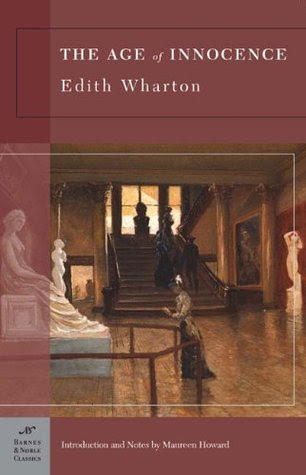
The Age of Innocence, Edith Wharton 


(First woman)Winner of the 1921 Pulitzer Prize, The Age of Innocence is Edith Wharton’s masterful portrait of desire and betrayal during the sumptuous Golden Age of Old New York, a time when society people “dreaded scandal more than disease.”

This is Newland Archer’s world as he prepares to marry the beautiful but conventional May Welland. But when the mysterious Countess Ellen Olenska returns to New York after a disastrous marriage, Archer falls deeply in love with her. Torn between duty and passion, Archer struggles to make a decision that will either courageously define his life—or mercilessly destroy it.

We will choose our next read from these books on Thursday 20th May when we meet to review our current book, The Librarian by Sally Vickers, at 8pm. I hope it is OK with everyone to meet via Zoom - the weather forecast is not great and we can't meet indoors so I have taken an almost unilateral decision on that. 

Monday, 15 February 2021

Book Choices for Spring

Every now and then I get a round robin email from a self-promoting author. They are rarely interesting. In January, however, I received a nicely put together, well targeted message from an author named Philip Bowne: 

I hope you’re keeping well and enjoying a good start to 2021. I also hope that you won’t mind me writing out of the blue - I found your details on the Reading Groups for Everyone website, while I was searching for book clubs in the Ox/Bucks area. I’m a local author - I grew up in Bicester. My first novel Cows Can’t Jump was published last September.

When this most recent lockdown in the UK was announced, I decided to reach out to Book Clubs and offer an Author Book Club, to share my writing and hopefully provide a much needed boost for people. My debut novel Cows Can’t Jump was published at the end of 2020. It’s a fun coming-of-age story that transports the reader across central Europe. It won the Spotlight First Novel Prize and was shortlisted for The Guardian’s Not the Booker Prize. 

One of the great disappointments of publishing my debut during the pandemic has been the inability to connect with readers. I am hoping that this might go some way in remedying that! 

If your group would be interested in reading the book, I would be delighted to offer an online Author Q&A session for the group if they wish. It would be fun to enjoy a drink, discuss the novel’s themes, characters, and ask any questions they may have. All in all, I want it to be a bit of fun, to help bring people together during lockdown, and to help spread the word about my novel! Debuting in 2020 was – as you can imagine – a bit of a nightmare, as it’s so difficult to connect with readers. I’m hoping the book club can help with that. 

If you are interested in finding out a bit more information, I’d be more than happy to discuss further! For a little more information on the book and myself: https://philipbowne.com

So I got in touch, explained how we choose our books and promised to pass his book details to Sue. We batted a couple of emails back and forth and agreed on 2 possible dates, for his book club idea, if we we would like to give his book a go: 25th March or the 8th April. 

If we decide we are up for a meeting with Phil, then this is the book. 

Cows Can't Dance by Philip Bowne

How far would you go for love?

Winner of the Spotlight First Novel prize, Philip Bowne's debut novel is an explosive coming-of-age odyssey. 18-year-old Billy is desperate to leave home. He's working the ultimate dead-end job as a grave-digger. His Grandad's engaged to a woman half his age, his Dad's become obsessed with boxing, and his Mum's certainly having an affair. Everything is changing, and Billy hates it.

Meeting the older, mysterious Eva, though, changes everything. She's passionate about Russian literature, Gary Numan, windfarms and chai tea, and Billy gambles everything for a chance to be with her. His scramble across Europe involves hitch-hiking with truckers, walking with refugees, and an encounter with suicidal cows. But the further he goes, the harder it is to be sure what he's chasing - and what he's running from.

This book is for everyone who wants to break out and follow their dreams.

By way of back up, or add on, we have 2 other books to consider:

Goodbye to Berlin by Christopher Isherwood

First published in 1939, this novel obliquely evokes the gathering storm of Berlin before and during the rise to power of the Nazis. Events are seen through the eyes of a series of individuals, whose lives are all about to be ruined.

Goodbye to Berlin, evokes the glamour and sleaze, excess and repression of Berlin society. Isherwood shows the lives of people under threat from the rise of the Nazis: a wealthy Jewish heiress, Natalia Landauer, a gay couple, Peter and Otto, and an English upper-class waif, the divinely decadent Sally Bowles.


Vesper Flights by Helen MacDonald

Animals don't exist to teach us things, but that is what they have always done, and most of what they teach us is what we think we know about ourselves.

From the bestselling author of H is for Hawk comes Vesper Flights, a transcendent collection of essays about the human relationship to the natural world.

Helen Macdonald brings together a collection of her best-loved writing along with new pieces covering a thrilling range of subjects. There are essays here on headaches, on catching swans, on hunting mushrooms, on twentieth-century spies, on numinous experiences and high-rise buildings; on nests and wild pigs and the tribulations of farming ostriches.

Vesper Flights is a book about observation, fascination, time, memory, love and loss and how we make the world around us. Moving and frank, personal and political, it confirms Helen Macdonald as one of this century's greatest nature writers.

We will meet to discuss our current book: The Pants of Perspective by Anna McNuff at 8pm on Thursday 18th February by Zoom. We can decide then on Phil's offer to meet and whether to read one book, or perhaps two over the coming Spring months. 


Monday, 21 September 2020

Book Choices For Autumn

We will meet by Zoom to discuss  Less by Andrew Sean Greer at 8pm on Thursday 24th September.

Here are the choices for our next book:

"


Three Stories by Alan Bennett

Three Stories: "Father! Father! Burning Bright", "The Clothes They Stood Up in", "The Laying on of Hands

Here are Alan Bennett's hugely admired, triumphantly reviewed and bestselling novellas, brought together in one book for the first time: 

Father! Father! Burning Bright, the savage satire on a dying man's family reaction as he still asserts control over them from the hospital bed. Over 60,000 sold in small format. 

The Clothes They Stood Up In, has sold over 200,000 copies as a small novella and was 14 weeks in the Bestseller lists. It is the painful story of what happens to an elderly couple when their flat is stripped completely bare. 

The Laying on of Hands, a memorial service for a masseur to the famous that goes horribly wrong. Over 100,000 copies sold as a novella. Like everything Alan Bennett does, these stories are playful, witty and painfully observant of ordinary people's foibles. And they all have a brilliant and surprising twist; are immensely funny and profoundly moral.

Pine by Francine Toon

They are driving home from the search party when they see her.

The trees are coarse and tall in the winter light, standing like men. 

Lauren and her father Niall live alone in the Highlands, in a small village surrounded by pine forest. When a woman stumbles out onto the road one Halloween night, Niall drives her back to their house in his pickup. In the morning, she's gone.

In a community where daughters rebel, men quietly rage, and drinking is a means of forgetting, mysteries like these are not out of the ordinary. The trapper found hanging with the dead animals for two weeks. Locked doors and stone circles. The disappearance of Lauren's mother a decade ago.

Lauren looks for answers in her tarot cards, hoping she might one day be able to read her father's turbulent mind. Neighbours know more than they let on, but when local teenager Ann-Marie goes missing it's no longer clear who she can trust.

In spare, haunting prose, Francine Toon creates an unshakeable atmosphere of desolation and dread. In a place that feels like the end of the world, she unites the gloom of the modern gothic with the pulse of a thriller. It is the perfect novel for our haunted times. 

The Thing About December by Donal Ryan

He heard Daddy one time saying he was a grand quiet boy to Mother when he thought Johnsey couldn’t hear them talking. Mother must have been giving out about him being a gom and Daddy was defending him. He heard the fondness in Daddy’s voice. But you’d have fondness for an auld eejit of a crossbred pup that should have been drowned at birth.’

While the Celtic Tiger rages, and greed becomes the norm, Johnsey Cunliffe desperately tries to hold on to the familiar, even as he loses those who all his life have protected him from a harsh world. Village bullies and scheming land-grabbers stand in his way, no matter where he turns.

Set over the course of one year of Johnsey’s life, The Thing About December breathes with his grief, bewilderment, humour and agonizing self-doubt. This is a heart-twisting tale of a lonely man struggling to make sense of a world moving faster than he is.

Donal Ryan’s award-winning debut, The Spinning Heart, garnered unprecedented acclaim, and The Thing About December confirms his status as one of the best writers of his generation.

Wednesday, 19 August 2020

A Sting in the Tale by Dave Goulson and The Heads of the Colored People by Nafissa Thompson-Spires

The high days and holidays of Summer saw just four of our group Zoomed in to discuss our latest reads: A Sting in the Tale by Dave Goulson and The Heads of the Colored People by Nafissa Thompson-Spires.

We started with Dave’s ‘Bee Book’.

“I tried it – it was boring” was quickly countered by “I wasn’t planning on reading a book about bees but found I couldn’t put it down” and “I was excited about reading this and all my expectations were met – totally loved it and couldn’t put it down” and “me too”. Our three ‘apologies’ also relished this book with one admitting to bombarding her husband with bee facts! The other two had started reading and enjoying learning about bees though one found it a slow read, and the other was reading it slowly as she could only absorb so many bee facts.

So, from a bad kick off we quickly moved on to discuss a book that the majority had found an enjoyable and/or interesting read. The passion that exuded from those that had read and enjoyed this book led to our member who found it boring admitting that she “went in with low expectations” and will “give it another go!”

This is a non-fiction book written by a man who has spent many years studying Bumble Bees and has published over 250 scientific articles on their biology. The dissenters can be forgiven for their low expectations but those who ventured forth were rewarded with a story that is both entertaining and educational. Who knew there was so much to learn about the humble bumble bee?

Dave himself is equally as humble, his writing passes on his learning in a way that engages the reader and as if being shared by a very ordinary person.

For anyone who cares, even just little bit, about ecology and nature, this is essential reading.

“I no longer feel guilty about the ‘weeds’ in my garden”, “I will never look at a bee again without thinking of Dave!”

Do we recommend it – YES!

We moved on to talk about The Heads of the Colored People. Just 2 of our 4 had read it. Both enjoyed the read: “It was brilliant, I read it again” and “I think it’s really good, I need to read it again”. Seems this is a book that deserves a second read (vs. a second chance).

This series of short stories is written in a fascinating style, that one of our readers described as ‘obscure’. It is, they felt, no about Black people in the USA (although it is) but could relate to any sub-group of society. One of our apologies also felt the same way about the subject group. 

There are many twists and turns, with unexpected endings. The reader is lured into the story and then ‘BANG’!

The stories are so varied: office politics, parental competitiveness, best friends backstabbing and so on. The authors ideas are ‘off the wall’. We wanted to know more about the author who seemed young but knowing. (I Googled her - she is 36 years old - I no longer know if that is young or old!). 

(Since our meeting I have started reading this book and am also really enjoying it and its quirkiness.)

Do we recommend it – another YES.

Our next book is Less by Andrew Sean Greer and we will meet (most likely by Zoom) at 8pm on Thursday 24th September.

Wednesday, 5 August 2020

Book Choices To Take Us Into Autumn

We will meet to discuss our current books: A Sting in the Tale by Dave Goulson and Heads of the Colored People by Narissa Thompson-Spires  at 8.15pm on Thursday 6th August, by ZOOM. 

Here are our next choices:

The Sellout by Paul Beatty

All it takes is a day trip past Georgetown and Chinatown. A slow saunter past The White House, Phoenix House, Blair House and the local crack house for the message to become abundantly clear. Be it ancient Rome or modern-day America, you’re either a citizen or a slave.

A biting satire about a young man's isolated upbringing and the race trial that sends him to the Supreme Court, The Sellout showcases a comic genius at the top of his game.

Born in the 'agrarian ghetto' of Dickens on the outskirts of Los Angeles and raised by a single father, a controversial sociologist, the narrator of The Sellout spent his childhood as the subject in racially charged psychological studies. He was led to believe that his father's pioneering work will result in a memoir that will solve his family's financial woes. But when his father is killed in a police shoot-out, he realises there never was a memoir. All that's left is the bill for a drive-thru funeral.

Fuelled by this deceit and the general disrepair of his hometown, the narrator sets out to right another wrong: Dickens has literally been wiped off the map to save California from further embarrassment. Enlisting the help of the town's most famous resident - the last surviving Little Rascal, Hominy Jenkins - he initiates the most outrageous action conceivable: reinstating slavery and segregating the local high school, which lands him in the Supreme Court.

Beatty’s fast-paced, hard-hitting prose is as eloquent as it is laugh-aloud funny. He is a master of his craft, riffing on the chords of contemporary black culture with a speed and deftness that leaves his readers breathless.

The Sellout is an outrageous and outrageously entertaining indictment of our time.

Less by Andrew Sean Greer

Less is the story of a 49-year-old writer, Arthur Less. Caught in a cycle of bad reviews and reduced to interviewing blockbuster-writing hacks for no fee, Arthur’s life is in freefall. Then, to crown his descent, he learns that his former boyfriend is about to get married. Determined to avoid the wedding - and heartbreak – at all costs, he decides to embark on a trip around the world, accepting invitations to a series of half-baked lectures and literary events.

From almost falling in love in Paris, almost falling to death in Berlin, to booking himself as the (only) writer on a residency in India, and an encounter in a desert with the last person on earth he wishes to see, Less is a novel about missteps, misunderstanding and mistakes.

Counting John Updike, Michael Chabon, Dave Eggers and John Irving among his many admirers Andrew Sean Greer has been steadily making a name as a writer to watch. Less is a tour de force offering; a book that will have you aching with laughter one moment and cut to the core the next. Excellent fun and endlessly surprising, it’s a novel about life’s unexpected turns and the resilience of hope. As the New York Times puts it, ‘no less than bedazzling, bewitching and be-wonderful’; it’s a joy to read.

A Confederacy of Dunces by Josh Kennedy Toole

A monument to sloth, rant and contempt, a behemoth of fat, flatulence and furious suspicion of anything modern - this is Ignatius J. Reilly of New Orleans, noble crusader against a world of dunces. The ordinary folk of New Orleans seem to think he is unhinged. Ignatius ignores them, heaving his vast bulk through the city's fleshpots in a noble crusade against vice, modernity and ignorance. But his momma has a nasty surprise in store for him: Ignatius must get a job. Undaunted, he uses his new-found employment to further his mission - and now he has a pirate costume and a hot-dog cart to do it with...


John Kennedy Toole (1937-1969) was born in New Orleans. He received a master's degree in English from Columbia University and taught at Hunter College and at the University of Southwestern Louisiana. He wrote A Confederacy of Dunces in the early sixties and tried unsuccessfully to get the novel published; depressed, at least in part by his failure to place the book, he committed suicide in 1969. It was only through the tenacity of his mother that her son's book was eventually published and found the audience it deserved, winning the 1981 Pulitzer Prize for Fiction. His long-suppressed novel The Neon Bible, written when he was only sixteen, was eventually published as well.

Friday, 3 July 2020

The Familiars by Stacey Halls

9 group members met, on Zoom, to discuss our latest read: The Familiars by Stacey Halls. After a short chat about life in lock down we dismissed the 'Reading Group Questions' provided at the end of the book, just before the advertisement (oh, exlusive extract) for The Foundling by Stacey Halls and got straight into lively conversation and debate. 

We kicked off with a classic Ashendon Book Group diversionary tactic: "I didn't want to read a book on the subject, so I read The Foundling instead! and really enjoyed it". So, let's reconsider dismissal of aforementioned ad. and give it a go sometime. 

The comment was met with the reassurance that the book was more about misogeny than witchcraft. We didn't get into deeper discussion on this obervation other than to log the fact that (male) doctors did not like losing business to midwives and that it was less about witchcraft than about relationships. Following the meeting I googled 'misogeny and witchcraft 1612' and up popped this: 


Back to the book: the story is based in the year 1612 and is about a young woman (aged 17), married to Richard Shuttleworth since the age of 13. Richard is a wealthy and successful local man, with realistic aspirations to be in Parliament and who needs an heir! Fleetwood has had several miscarriages and is desparate to have a child with Richard whom she loves very much. The story does touch on how this situation impacts their relationship but the main focus is on Fleetwood's relationship with a local midwife.

Although based on a true story, Stacey Halls makes no secret that this book is fiction. So Fleetwood is presented as a feisty girl who gallops around the county on a horse, with a huge dog in tow, and makes day trips to Lancaster (about 40 miles away) - this in itself is improbable and Fleetwood was heavily pregnant at the time! It made the story interesting but some of our group found 'flying in the face of historical reality' frustrating. Those of the group who wanted more historical fact were disappointed. This is not an historical novel. It is almost as if the author wanted Fleetwood to be living in modern times. 

There were though 'nods' to history, such as references to travelling players performing Shakespeare (including the popular Macbeth) but overall the book failed to give insight or conclude the purpose of 'the nod'. It feels as if the author has a few bits of information from her visits to Gawthorpe Hall and Wikepedia and has dropped them into a story with no clear purpose.

Going back to this not being an historical novel, there was a feeling that more insight to the Pendle Witch Trials would not have gone amiss. Compared to Year of Wonders by Anna Frith, another 'not historical novel' based on historical fact that we have read as a group, we felt that The Familiars lacked depth. Even the concept of Familiars was inadequately explained or followed through in the story - we imagined they are similar to Phillip Pullmans Demons - luckily we had already read that!

Interesting fact from Sue: In 1652, George Fox (Founder of The Quakers) climbed Pendle Hill in Lancashire, where he had a vision of a “great people to be gathered” waiting for him. The beginning of the Society of Friends (Quakers) is usually dated from the day, soon afterwards, when Fox preached to large crowds on Firbank Fell, near Sedbergh, in Cumbria. We wonder what drew him to Pendle Hill?

Would we recommend this book? No, unless you don't want to know about the witch thing and are looking for an beach read. It is luke warm and there are better books to use your time on. 

The group did not agree on the book as a 'good read', one reader felt it was a 'page turner' and couldn't put it down (despite it not giving what she wanted), others felt it 'dragged on'; was 'longer than expected' and one member of our group even fell asleep while reading it. Then we had: 'I wouldn't choose to read another book by the same author', followed by 'Oh I would!' and 'The Foundlings is a good read'.

We couldn't choose between 2 of the 3 books proposed for our next read so we are going to read both and meet again in 6 weeks on Zoom (or possibly in small groups + Zoom). So our next reads are: Heads of the Colored People by Nafissa Thompson-Spires and A Sting in the Tale by Dave Goulson and we will meet to discuss these on 6th August. 


Monday, 22 June 2020

Book Choices for SUMMER 2020


Here are our choices for what could be a very hot Summer.

Heads of the Colored People by Nafissa Thompson-Spires

In this crackling debut collection Nafissa Thompson-Spires interrogates our supposedly post-racial era. To wicked and devastating effect she exposes the violence, both external and self-inflicted, that threatens black Americans, no matter their apparent success.

A teenager is insidiously bullied as her YouTube following soars; an assistant professor finds himself losing a subtle war of attrition against his office mate; a nurse is worn down by the demand for her skills as a funeral singer. And across a series of stories, a young woman grows up, negotiating and renegotiating her identity.

Heads of the Colored People shows characters in crisis, both petty and catastrophic. It marks the arrival of a remarkable writer and an essential and urgent new voice.

The Henna Artist by Alka Joshi

Vivid and compelling in its portrait of one woman's struggle for fulfillment in a society pivoting between the traditional and the modern, The Henna Artist opens a door into a world that is at once lush and fascinating, stark and cruel.
Escaping from an abusive marriage, seventeen-year-old Lakshmi makes her way alone to the vibrant 1950s pink city of Jaipur. There she becomes the most highly requested henna artist--and confidante--to the wealthy women of the upper class. But trusted with the secrets of the wealthy, she can never reveal her own...

Known for her original designs and sage advice, Lakshmi must tread carefully to avoid the jealous gossips who could ruin her reputation and her livelihood. As she pursues her dream of an independent life, she is startled one day when she is confronted by her husband, who has tracked her down these many years later with a high-spirited young girl in tow--a sister Lakshmi never knew she had. Suddenly the caution that she has carefully cultivated as protection is threatened. Still she perseveres, applying her talents and lifting up those that surround her as she does.

A Sting in the Tale by Dave Goulson

A popular science book about bumblebees and about life as a field biologist.

Dave Goulson has always been obsessed with wildlife, from his childhood menagerie of exotic pets and dabbling in experimental taxidermy to his groundbreaking research into the mysterious ways of the bumblebee and his mission to protect our rarest bees.

Once commonly found in the marshes of Kent, the short-haired bumblebee is now extinct in the UK, but still exists in the wilds of New Zealand, descended from a few queen bees shipped over in the nineteenth century.

A Sting in the Tale tells the story of Goulson’s passionate drive to reintroduce it to its native land and contains groundbreaking research into these curious creatures, history’s relationship with the bumblebee, the disastrous effects intensive farming has had on our bee populations and the potential dangers if we are to continue down this path.

Here is some good news:

https://www.hugofox.com/community/ashendon-parish-council-10421/news/buckinghamshire-libraries-launch-new-request-collect-service-36642

We will meet to discuss our current read: The Familiars by Stacey Halls at 8.15pm on Thursday 25th June, by ZOOM. Before then I'll be:


Tuesday, 19 May 2020

Reading Choices as Lock Down Eases a Little

We will meet for the third time (where did that time go?) by Zoom on Thursday 21st May, for our virtual meeting.

An American Marriage by Tayari Jones


A tender and humane dissection of what happens to a relationship when unforeseen events conspire to sabotage it. Tayari Jones’ handling of her protagonists’ emotions is a masterclass in authentic characterisation whilst the story subtly probes issues of race and justice with a piercing emotional intelligence and colossal heart.


Newlyweds Celestial and Roy are the embodiment of the American Dream. He is a young executive, and she is an artist on the brink of an exciting career. Until one day they are ripped apart by circumstances neither could have imagined. Roy is arrested and sentenced to twelve years for a crime Celestial knows he didn't commit.

Devastated and unmoored, Celestial finds herself struggling to hold on to the love that has been her centre, taking comfort in Andre, their closest friend. When Roy's conviction is suddenly overturned, he returns home ready to resume their life together.

A masterpiece of storytelling, An American Marriage offers a profoundly insightful look into the hearts and minds of three unforgettable characters who are at once bound together and separated by forces beyond their control.

Novel On Yellow Paper by Stevie Smith


Stevie's alter ego Pompey is young, in love and working as a secretary for the magnificent Sir Phoebus Ullwater. In between making coffee and typing letters for Sir Phoebus, Pompey scribbles down - on yellow office paper - her quirky thoughts. Her flights of imagination take in Euripedes, sex education, Nazi Germany and the Catholic Church, shattering conventions in their wake.


The Familiars by Stacey Halls 

Strikingly evoking the heartland of seventeenth-century industrial Lancashire, Stacey Halls’ accomplished debut is a haunting novel of two women struggling to fight against the expectation and superstition of their age. Told with an infectious passion for the period, Halls’ blend of compelling plot and vividly drawn landscape crafts an unforgettable story of bewitching power.
In a time of suspicion and accusation, to be a woman is the greatest risk of all...

Fleetwood Shuttleworth is 17 years old, married, and pregnant for the fourth time. But as the mistress at Gawthorpe Hall, she still has no living child, and her husband Richard is anxious for an heir.

When Fleetwood finds a letter she isn't supposed to read from the doctor who delivered her third stillbirth, she is dealt the crushing blow that she will not survive another pregnancy. Then she crosses paths by chance with Alice Gray, a young midwife. Alice promises to help her give birth to a healthy baby, and to prove the physician wrong.

As Alice is drawn into the witchcraft accusations that are sweeping the north-west, Fleetwood risks everything by trying to help her. But is there more to Alice than meets the eye? Soon the two women's lives will become inextricably bound together as the legendary trial at Lancaster approaches, and Fleetwood's stomach continues to grow. Time is running out, and both their lives are at stake. Only they know the truth. Only they can save each other.

We will meet to discuss our current read: The Switch by Beth O'Leary at 8pm on Thursday 21st May, by ZOOM.

Monday, 27 April 2020

A Month in the Country by J.L. Carr

Ten of us met on ZOOM to discuss our 'lock-down' reading of this very short memoir of time spent in the countryside. Once again we all agreed that this was a great read. We loved it.


This is a perfect book group read, and one that few of us would have read had it not been a group choice. Some of our group watched the film, made in 1987, starring Colin Firth being very Colin Firth - it wasn't well liked!

The book though is exquisite. The writing style is accessible and matter of fact. There is a lot to read in every sentence and it is an easy read. The descriptions are beautiful and the humour wonderful. It tells the story of two young men returned from the trenches of WW1 who find specialist work in a small Yorkshire village. The story alludes to many things about the 'war experience' in a subtle and gentle manner, and it doesn't dwell on things.

There is no plot and there is no reason to 'rush' through the 100 pages and yet it is a page turner.

The timing of this read gave us the opportunity to reflect on our own experience of 'lock-down' in a small village. We are in a small universe, just like Oxgodby, we can function without the big wide world and we are finding just how therapeutic the countryside can be. It is easy to imagine now how much good the pace and community of a small village would have been for two city dwelling men, broken by war, to spend some time in. Our French member brought our conversation to a lovely close by announcing 'I love the English countryside in the Summer.' Our Australian member agreed and the rest of didn't dispute it!

Our next read will be The Switch by Beth O'Leary and we will meet in a month, once again virtually, on 21st May at 8.15 pm. After our rather abrupt enforced ending of this meeting, a use of full ZOOM account has been offered and Sue will set us up and send invites.

Until then here's a little about J.L. Carr from a resident of Ashendon who knew him:

40 years ago, I was an undertaker, working in the family business, in Kettering , Northamptonshire: the county of "Squires and Spires". I did meet Carr from time to time on various funerals. But that was not where we first became acquainted. The local art shop 'Dinsdales', a frequent haunt of mine, was full of prints, tints and watercolours of local  Churches, some with stupendous skyscraping skylons, others, with squat towers as if trying to fold back into the countryside and hide for fear of offending the county's signature edifices Among these pictures I first came across some print oddities, described by the proprietor thus: “ That's by Carr, he does them himself, he used to be a local headmaster.”
It  cost more to frame, than to buy his prints... Unlike The Dan Dare print hanging next to Carr’s, by local Cartoonist Frank  Bellamy (who had just died) and was described  as a  “Renown Nationally Newspaper Illustrator”. His proofs fetched hundreds. But I preferred the idiosyncratic J.L. Carr.

Kettering was then, a boot and shoe town. The headquarters of the British Shoe and Allied Trades Research Centre (SATRA) was and still is based there today, as are the scatterings of some high brand boots and shoes manufacturers. If you look at Kettering's coat of arms, you'll notice a slave with a broken manacle and a leather hide. That's where it all started, the leather industry, a rural economy, marked by  a strong allegiances  to  non-conformism. Everywhere countryside. a massive park donated by the local engineer and philanthropist Charles Wicksteed vies on It's outskirts with a massive private estate belonging to Britain's largest (by acreage) landowner. Then even more rolling countryside.

So hopefully, you've now got the picture of a market town with little to distinguish it from rolling acres of countryside but Carey the Baptist, Knibb the freer of slaves, Wicksteed park, possibly the Duke of Buccleuch , an incredibly inspiring spire and an awful lot of footwear.

Gently undulating hills on vast tracts of farmland in Northants. separate a half a dozen very large towns. Few villages, means  traveling  several Miles between settlements is not unusual.
Kettering was a self important fish of a town in a modest pond.  It felt bigger than it was.  Surrounding villages were exceptionally modest despite being endowed with churches of outstanding character, full of under appreciated architectural gifts that  took the talent of J.L. Carr to prevent them being obliterated by time and vandalism and lost from consciousness .

He took on his own mission, to prevent one particular local, yet remote and derelict village church from bring made redundant. In this, the ex-teacher partially failed, though not to annoy church authorities. But that church, who’s actual fabric he helped preserve became a field centre and another local church followed suit to become a training school for stonemasons, something else that Carr turned his eccentric attentions too.
A curate of that aforementioned Kettering Church , with the landscape dominating Spire, who self importance had obvious rubbed off on himself, visited JL Carr at home. Carr had carved some statues at the church out of old curb stones to replace ones lost in the reformation. Despite my curate friend’s right wing pretensions, he was very offended when Carr concentrated his energies on trying to get him to purchase some of his prints, disdaining just how small Carr’s bedroom cum print shop was.
It would have been water off a ducks back. Carr was used to disdain. Have a look at his Wikipedia entry, where he described himself.
If you have any doubt about his interest, indeed passion for church architecture, compare two of his prints below hanging in my house.
The quirky Northants. map left ; then the print of local Northampton-shire church stone work (The Soke of Peterborough was part of Northants., pre-boundary changes).
Enlarged sections of both follow below.
I hope you can enjoy this additional glimpse into J.L. Carr .
You may like to add him to that list of Kettering’s distinguishing graces...
Richard (Phillips)


Monday, 20 April 2020

Reading Choices to Lighten Up Unprecedented Times

We will meet for the second time by Zoom on Thursday 23rd April, for our virtual meeting. Our book choices are the result of Sue's research into 'uplifting' books for a period of lockdown. Here they are:

What Ho!: The Best of Wodehouse: The Best of P.G.Wodehouse 

We all know Jeeves and Wooster, but which is the best Jeeves story?
We all know Blandings, but which is the funniest tale about Lord Emsworth and his adored prize-winning pig? And would the best of Ukridge, or the yarns of the Oldest Member, or Wodehouse's Hollywood stories outdo them? This bumper anthology allows you to choose, bringing you the cream of the crop of stories by the twentieth century's greatest humorous writer.

There are favourites aplenty in this selection, which has been compiled with enthusiastic support from P.G. Wodehouse societies around the world. With additional material including novel extracts, working drafts, articles, letters and poems, this anthology provides the best overall celebration of side-splitting humour and sheer good nature available in the pages of any book.

A Gentleman in Moscow by Amor Towles

On 21 June 1922 Count Alexander Rostov – recipient of the Order of Saint Andrew, member of the Jockey Club, Master of the Hunt – is escorted out of the Kremlin, across Red Square and through the elegant revolving doors of the Hotel Metropol.

But instead of being taken to his usual suite, he is led to an attic room with a window the size of a chessboard. Deemed an unrepentant aristocrat by a Bolshevik tribunal, the Count has been sentenced to house arrest indefinitely.

While Russia undergoes decades of tumultuous upheaval, the Count, stripped of the trappings that defined his life, is forced to question what makes us who we are. And with the assistance of a glamorous actress, a cantankerous chef and a very serious child, Rostov unexpectedly discovers a new understanding of both pleasure and purpose.

The Switch by Beth O'Leary

Leena is too young to feel stuck.
Eileen is too old to start over.
Maybe it's time for The Switch...

Ordered to take a two-month sabbatical after blowing a big presentation at work, Leena escapes to her grandmother Eileen's house for some overdue rest. Newly single and about to turn eighty, Eileen would like a second chance at love. But her tiny Yorkshire village doesn't offer many eligible gentlemen... So Leena proposes a solution: a two-month swap. Eileen can live in London and look for love, and Leena will look after everything in rural Yorkshire.

But with a rabble of unruly OAPs to contend with, as well as the annoyingly perfect - and distractingly handsome - local schoolteacher, Leena learns that switching lives isn't straightforward. Back in London, Eileen is a huge hit with her new neighbours, and with the online dating scene. But is her perfect match nearer to home than she first thought?


We will meet to discuss our current read: A Month in the Country by JL Carr at 8pm on Thursday 23rd April, by ZOOM.  Jitsi was also suggested as an alternative to Zoom because it offers unlimited time, but having sent details out to various members of our group by various methods I was concerned someone would get missed if we changed tack this time. So, the meeting will only last 40 minutes, limited by the software licence so please try to join 5 minutes before, with choice of beverage to hand, so we can make a prompt start. We can always take a quick break and start another session if we need/want to. And let's discuss the Jitsi option if we have time, hopefully I will have managed to test it between now and then.