Monday, 26 March 2018

A Man Called Ove by Fredrick Backman

We talked for a long time about this book but I can't say much here for fear of spoiling the story. This is a brilliant read and a great choice for a book group.  It is deceptively rich and full of surprises that command discussion. It's a beautiful, poignant and well-constructed story.

It took most of us a couple of chapters to find our way into the story and yet we all knew it was worth 'persevering'. Perhaps Fredrick crafted his work to achieve just this response? From therein the short episodes hang together in a flowing, entertaining tale of Ove from boy to man. Ove makes you chuckle, he makes you cry and he makes you reflect on your own life and attitudes.

Our group gave this book a 100% thumbs up and would recommend it to anyone as a really good reading experience.

Our next book is The Good Terrorist by Doris Lessing and we will meet on Thursday 24th May to discuss our Spring reading experience, let's hope this one is as good as the last!


Monday, 12 March 2018

Book Choices for April and May 2018

Here are the choices for our next read.

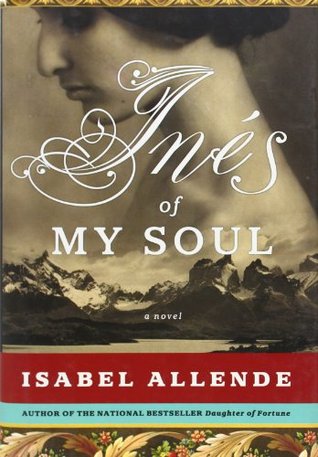
Inés of My Soul by Isabel Allende

In the early years of the conquest of the Americas, Inés Suárez, a seamstress condemned to a life of toil, flees Spain to seek adventure in the New World. As Inés makes her way to Chile, she begins a fiery romance with Pedro de Valdivia, war hero and field marshal to the famed Francisco Pizarro. Together the lovers will build the new city of Santiago, and they will wage war against the indigenous Chileans—a bloody struggle that will change Inés and Valdivia forever, inexorably pulling each of them toward separate destinies.

Inés of My Soul is a work of breathtaking scope that masterfully dramatizes the known events of Inés Suárez's life, crafting them into a novel rich with the narrative brilliance and passion readers have come to expect from Isabel Allende.

The Good Terrorist

A hugely significant political novel for the late twentieth-century from one of the outstanding writers of the modern era and Winner of the Nobel Prize for Fiction 2007. In a London squat a band of bourgeois revolutionaries are united by a loathing of the waste and cruelty they see around them. These maladjusted malcontents try desperately to become involved in terrorist activities far beyond their level of competence. Only Alice seems capable of organising anything. Motherly, practical and determined, she is also easily exploited by the group and ideal fodder for a more dangerous and potent cause. Eventually their naive radical fantasies turn into a chaos of real destruction, but the aftermath is not as exciting as they had hoped. Nonetheless, while they may not have changed the world, their lives will never be the same again...

The Wind-Up Bird Chronicle by Haruki Marakami

Oru Okada's cat has disappeared. His wife is growing more distant every day.

Then there are the increasingly explicit telephone calls he has recently been receiving.

As this compelling story unfolds, the tidy suburban realities of Okada's vague and blameless life, spent cooking, reading, listening to jazz and opera and drinking beer at the kitchen table, are turned inside out, and he embarks on a bizarre journey, guided (however obscurely) by a succession of characters, each with a tale to tell.


We will choose which one to read at our next meeting on Thursday 15th March when we will discuss A Man Called Ove by Fredrik Backman. See you then, at The Hundred, 8pm.

Monday, 29 January 2018

The Fall of the House of Wilde by Emer O'Sullivan

Eight of us met to discuss this book which was a brilliant turn out given that just three had finished reading it!. Two were 'almost there', two were still only a quarter of the way through and one had not started. Why so lax? it was over Christmas and a busy time, there were lots of Christmas gift books to read, the library didn't get it on time and all this coupled with the 'lots of pages' intense and challenging nature of this read led us to slow it down. 

Our list of excuses is totally valid: this is indeed a long, complex, challenging read. Once into it however, it is not a hard book to read and enjoy. We all intend to finish the book and most of us had plenty to discuss at out meeting. Indeed, we had one of our longest book group discussions for some time.

At the beginning of the story William and Jane Wilde, the eccentric Anglo-Irish parents of Oscar Wilde, are the main subject. We were surprised to learn that they were both highly accomplished in their own right. By the time he was 30 years old William was specialising in eye and ear surgery, had written a popular travel book and made important contributions to archaeology. He was also an aficionado of Irish folklore. Aged 36 William married Jane who was already a popular revolutionary poet, well known and respected in literary and political circles - she was a nationalist and was involved in, yet unscathed by, the 1848 uprisings and was an early advocate of women's rights and campaigned for better education for women. 

We concluded that Oscar Wilde was raised by amazing parents in an incredibly lively and vibrant home environment. There were other children too: Willie was Oscar's older brother and Isola a younger sister who died in childhood. William Wilde also had three illegitimate children.

Despite great fame and fortune, the family faced financial ruin following the death of William, and yet continued to spend vast sums almost seemingly operating on a higher intelletual plane. Willie, Oscar's brother, failed to achieve his potential whereas Oscar, though seriously flawed, self important and arrogant went on to contribute significantly to the literary world. All three lived hand to mouth and (lavishly) spent whatever money came their way (in some instances this was very significant amounts).

The early Oscar was kind to his mum and when asked to do so he would support her through each financial crisis. Jane remained strongly independent and frequently returned any payments made on her behalf as soon as she could. Jane was a fabulous mum, loyal and supportive of her two boys, despite their faults (which were many!) The photographs of Jane in the book were surprising as she appears to have been far more beautiful than the text implied.

We discussed Oscars work and concluded his brilliance! though we did not all 'like' him as a person. Not one of us could deny that his extensive work as a critic and as a writer was truly impressive and still today his novels, childrens books, plays, letters and poetry are central to English literature. 

By the end of our discussion the member who had yet to start the book announced 'I am quite looking forward to reading this' which we think is enough said. This is a great read and a good choice for book groups - we recommend it as a worthwhile read. 

Our next book is A Man Called Ove by Fredrik Backman and we will be discussing it on Thursday March 15th at The Hundred, 8pm. 

Monday, 22 January 2018

Book Choices for February and March 2018

Another year of reading presents itself - I wonder what it will bring?

To start the year we have three interesting choices:


Peter by Harvey Barrier

Peter is a bright young boy - a typical teenager in most respects. He likes fast cars, gets into tiffs with his parents and has little patience for schoolwork, despite being talented with it. Unlike most typical teenagers, however, he becomes too enamoured with the easy riches that the dark underworld of the city can provide for him and has taken to dealing drugs to make quick cash. It's not long before Peter sees the error of his ways - when gang turf wars are on the horizon and Peter is expected to up his game, he struggles to see a way out of it without getting himself seriously hurt. With limited options ahead of him and dangerous threats making their way to himself and his family, Peter sees only one escape route, and it lies a long, long way away...

A Man Called Ove by Fredrik Backman

At first sight, Ove is almost certainly the grumpiest man you will ever meet. He thinks himself surrounded by idiots - neighbours who can't reverse a trailer properly, joggers, shop assistants who talk in code, and the perpetrators of the vicious coup d'etat that ousted him as Chairman of the Residents' Association. He will persist in making his daily inspection rounds of the local streets.
But isn't it rare, these days, to find such old-fashioned clarity of belief and deed? Such unswerving conviction about what the world should be, and a lifelong dedication to making it just so?
In the end, you will see, there is something about Ove that is quite irresistible...

The Plague Dogs by Richard Adams

Two dogs, Snitter and Rowf, escape from a research laboratory in the Lake District where it is wrongly supposed they have been purposely infected with a deadly virus and now pose a dangerous threat to the human population. As the authorities give chase, the two friends make their way through the hills and across the moors, along the way learning to survive on their wits and finding friendship and help from a fox they encounter. They dream of finding their original owners and a safe haven - but the hunt is on.
A lyrical and engrossing tale, The Plague Dogs is a remarkable journey into the hearts and minds of two canine heroes.


We will make our choice at our next meeting on Thursday 25th January when we will discuss The Fall of the House of Wilde by Emer O'Sullivan. See you at The Hundred, 8pm.

Friday, 1 December 2017

Poldark by Winston Graham

Seven members of our group enjoyed a relaxed discussion about a book we were pleasantly surprised with. We knew it was going to be a relatively easy read but found we really got into the story which was well written, extremely vivid and had an excellent sense of place and time. 

Some of us had watched, and enjoyed, the TV series' (1975 and 2014) which are closely based on the Poldark series of 12 books. It didn't seem to matter whether we had or hadn't, as the characters sprung to life and were easy to get to into. There was, of course, a slight distraction every time Aiden Turner was mentioned! (Robin Ellis - the 1975 Poldark didn't get the same response). Those with 'book and TV' experience were, though, able to draw comparisons and agreed that: George was less creepy in the book and Jud and Prudy were less 'in your face'. None of us felt the TV series did any injustice to the book (as is often the way).

Sue brought along her (almost obligatory) timeline which gave us a good sense of the historical timing of the novel which is set in 1785 to 1787 -  happening in the world was:

1783
  • February - UK recognised the independence of the USA 
  • June - Montgolfier Brothers demonstrated their hot air balloon
  • November - Waterford Crystal was established and the last British troops left New York 
  • December - Saw the first public demonstration of the Parachute (in France)
  • Prime Minister - William Cavendish Bentink led the coalition government until William Pitt the Younger (Tory) took office in December
  • King George 3rd was on the throne
1785
  • Herschel discovered Uranus's moons: Titania and Oberon
  • Mozart Symphony No. 38 was premiered in Prague
  • 700 convicts left England for Australia to establish the first penal colony there
  • The Society for Effecting the Abolition of the Slave Trade was founded
  • 1st cricket match was played at Lords
  • US Constitution was adopted
  • William Bligh set sail from England on the HMS Bounty
Starting with Ross Poldark returning from the wars in America, this book truly reflects the time it was set in and makes references to the events, and trends, of the day as they mattered to Cornwall and highlights the insular way of life in a small, relatively isolated county. Ross returns more worldly than his peers and his character challenges the otherwise accepted social structure, and the order of things: standing up for the poor and the injustices he felt were served on people who were simply trying to survive and joining in with the local traditions (such as the arrival of the pilchards and their 'harvest'). 

We loved this book, and would recommend to anyone. The Ashendon Book Group Poldark Fan Club is now established and most of us will read the other books as and when the opportunity arises (acquisition of the box set was even mentioned!) 

Our next book, however, is really quite different in genre. Our Christmas and New Year read is: The Fall of the House of Wilde by Emer O'Sullivan and we will meet to discuss our reading experience in The Hundred at 8pm on Thursday 25th January 2018.

Monday, 20 November 2017

Book Choices for December and January

We are meeting at The Hundred on Thursday, November 23rd to discuss Poldark by Winston Graham. Here are our choices to... gulp...end the year and start the new with. Where did all that reading time go? 

Together by Julie Cohen

An epic love story with a secret you won’t see coming. 

On a morning that seems just like any other, Robbie wakes in his bed, his wife Emily asleep beside him, as always. He rises and dresses, makes his coffee, feeds his dogs, just as he usually would. But then he leaves Emily a letter and does something that will break her heart. As the years go back all the way to 1962, Robbie's actions become clearer as we discover the story of a couple with a terrible secret - one they will do absolutely anything to protect.


News from Nowhere by William Morris

Or an Epoch of Rest, Being Some Chapters From a Utopian Romance.
News from Nowhere(1890) is the best-known prose work of William Morris and the only significant English utopia to be written since Thomas More's. The novel describes the encounter between a visitor from the nineteenth century, William Guest, and a decentralized and humane socialist future. Set over a century after a revolutionary upheaval in 1952, these "Chapters from a Utopian Romance" recount his journey across London and up the Thames to Kelmscott Manor, Morris's own country house in Oxfordshire. Drawing on the work of John Ruskin and Karl Marx, Morris's book is not only an evocative statement of his egalitarian convictions but also a distinctive contribution to the utopian tradition. Morris's rejection of state socialism and his ambition to transform the relationship between humankind and the natural world, give News from Nowhere a particular resonance for modern readers. This text is based on the 1891 version, incorporating the extensive revisions made by Morris to the first edition.


The Fall of the House of Wilde by Emer O’Sullivan

Oscar Wilde's father - scientist, surgeon, archaeologist, writer - was one of the most eminent men of his generation. His mother - poet, journalist, translator - hosted an influential salon at 1 Merrion Square. Together they were one of Victorian Ireland's most dazzling and enlightened couples. When, in 1864, Sir William Wilde was accused of sexually assaulting a female patient, it sent shock waves through Dublin society. After his death some ten years later, Jane attempted to re-establish the family in London, where Oscar burst irrepressibly upon the scene, only to fall in a trial as public as his father's.
A remarkable and perceptive account, The Fall of the House of Wilde is a major repositioning of our first modern celebrity, a man whose fall from grace marked the end of fin de siècle decadence.

Wednesday, 11 October 2017

An Instance of the Fingerpost by Iain Pears

Seven members of our group met to discuss our high Summer read - a complex novel set in 1663 around the individual narrated memoirs of four characters, about the circumstances surrounding a murder in Oxford.

The book is 698 pages long and most of us agreed it was quite hard to read. It is easy to lose track and forget some of the detail (there was a lot of back and forth in the reading for those of us who like to stay in control!). Whilst a fascinating read, this is a perfect book for group discussion. As we talked the layers unpeeled and between us, we came to realise the depth and meaning of the content which made the book all the more interesting. Knowing Oxfordshire really added a level of enjoyment - we all agreed that Thame has improved significantly from the 1663 description as a 'mean' little town!

Many of the characters and places are real. Two of the four narrators are historical figures: John Wallis (before Isaac Newton he was the most influential English mathematician) and Anthony Wood (an Oxford historian). The other two narrators (Jack Prestcott and Marco da Cola) are fictional characters though based on real people of the time. 

Other characters are also drawn from real life and events of the time. There are so many characters it is impossible to reflect on all of them here.

We were as one with regard to John Wallis (we didn't like him much) and Anthony Wood was a firm favourite. Anthony was an Oxford man through and through; he was born, lived and died in Postmaster's Hall in Merton Street and educated at Merton College. In the story, Anthony comes across as a man with (at least) some conscience - it does seem however that he was not as well liked in real life and is described as: 'a cantankerous and vituperative character who fell out with everyone sooner or later.' he was also sued for libel. 

So many other real historical figures pop up in the story and add to the richness of the reading experience - this is a time of enlightenment when so much is being discovered in science, engineering, medicine etc. it is a great read just for the historical interest.

Sarah Blundy was, we felt, the character with most integrity -  her character is fascinating, and led our discussions into the religious and symbolic nature of the story. We also liked that a woman was the central character of interest. The other woman of significance is Kitty who, despite her circumstances, was a woman of independence. 

Throughout, the order of things (religion and society) is upheld at this time (which is just after the restoration of the monarchy following the English Civil War, when the authority of King Charles is not yet certain). Even the academics and men of science didn't waiver from their belief in the order of things. 

What is the 'fingerpost'? this is explained late on in the novel as: 'When in the investigation of any nature the understanding is so balanced as to be uncertain, instances of the fingerpost show the question is decided. Such instances afford very great light, the course of interpretation sometimes ending in them. Sometimes these instances meet us accidentally among those already noticed.' In the original Latin, the term "fingerpost" is simply "cross" (crucis), echoing the decisive "crucifixion" revealed in the story.

Overall we concluded that this is a very well researched and clever novel. Pears slips in little facts that add to the interest. All is woven together so as to tell small stories within a bigger plot that will not be uncovered until the very end - this is a very clever book indeed.

Would we recommend this book? Yes, particularly as one to be discussed with others and certainly for anyone with a love of Oxford.   

Our next book is a lighter, though equally historical, story of Ross Poldark by Winston Graham - we will meet on Thursday 23rd November at The Hundred to discuss our autumn reading experience.