Thursday, 22 July 2021

The Librarian by Salley Vickers and I Capture the Castle by Dodie Smith

I have been remiss in not sharing our review of The Librarian so this is a 2 for 1. 

On 20th May, 10 of us discussed The Librarian by Salley Vickers on, what I hope will be our last, zoom meeting. Once we had debated the act of reading a book in the bath (for some a heinous crime, for others a risk worth taking and for the rest one of the greatest pleasures in life!) we knuckled down to, what turned out to be, a pretty damning review of a book we had all hoped to be so much more. 

The story is about the experience of a young librarian who, in 1958, lands the job to run the children's section in a small town library. This is an easy to read, enjoyable story that took most of us back to our childhood experiences of going to the library. Libraries (back in 'the day') were mostly staffed by strict, rigid librarians and woe betide you if you coughed, spoke or dropped a book. Still, we reflected on fond memories of going to the library and getting told off!

We also enjoyed how Salley captured many of the ways of the time. But as the book went on it felt as if she didn't know where to stop. One of our members observed that it was as if she had simply "chucked in a lot of things she could remember from those days". 

Our expectation was of so much more from Salley Vickers who has written some fine books, such as Mrs Garnet's Angel, over a long career. It is a harmless book but, in our collective opinion, it represents a massively missed opportunity of what it could have been. We were expecting something more philosophical on subjects such as selective education and missed things we should have done, but it led nowhere. Instead, it is a trite and shallow read. 

To sum it up here are our individual conclusions: "I put it down and stopped reading because life is too short." "Watching paint dry." "A book going nowhere." "Terrible." "Poorly written". "She got a contract to write 3 books and banged this one out as the last!". "Was it a children's book?". 

We did enjoy the focus on literature for young people and discussing the authors, and books, we had read and loved as children. Our lovely French lady was excited to learn about the books that British children were reading at that time, many of which she had never heard of and is now keen to read for herself e.g. Tom's Midnight Garden. 

In fact, it was Salley Vickers' continual references to I Capture the Castle that inspired the choice of our next read...

I Capture the Castle by Dodie Smith was the focus of our meeting on 15th July when 7 of us were lucky enough to enjoy a warm and sunny evening at our local pub, discussing a very satisfactory reading experience. 

This story is jam-packed with odd, eccentric characters, set in 1930's Suffolk with occasional visits to London. 

The book is exceptionally well written. Originally written for adults in 1948 it now crosses the divide between childrens' and adult literature and is now considered appropriate for today's young teens. In 1958 the thought of allowing a teenager to read such a book was the focus of Salley Vickers' scandal in The Librarian. 

In comparison to The Librarian (although there should be no comparison) we found ourselves involved with the characters, we could almost smell the castle and we laughed out loud, shed tears and fell in love with these people, their homes and their lives. 

The situations led us into the philosophical conversations we so enjoy at book group and it is a unanimous YES to the question: would we recommend this book? 

Our next read is The Midnight Library by Matt Haig and we plan to meet once again at The Hundred of Ashendon on Thursday 2nd September at 8pm, to discuss this currently chart-topping novel. Have a lovely Summer.


Monday, 12 July 2021

Summer Reads 2021

Snow Falling on Cedars by David Guterson

In 1954 a fisherman is found dead in the nets of his boat, and a local Japanese-American man is charged with his murder. In the course of his trial, it becomes clear that what is at stake is more than one man's guilt. For on San Piedro, memories grow as thickly as cedar trees and the fields of ripe strawberries - memories of a charmed love affair between a white boy and a Japanese girl; memories of land desired paid for and lost. Above all, San Piedro is haunted by the memory of what happened to its Japanese residents during World War II, when an entire community was sent into exile while its neighbours watched.


Brave New World by Aldous Huxley

Ranked as one of the top dystopian novels of all time, the top 100 greatest novels of all time, and the novel was listed at number 87 on The Big Read survey by the BBC, the Brave New World is often considered a masterpiece in its genre. The plot revolves around an attempt to classify population based on their intelligence whereby the wombs are altered to produce super-intelligent species and the world thereof. The book has since been adapted in various dramatic, television, and movie adaptation


The Midnight Library by Matt Haig

Between life and death, there is a library, and within that library, the shelves go on forever. Every book provides a chance to try another life you could have lived. To see how things would be if you had made other choices . . . Would you have done anything differently, if you had the chance to undo your regrets?

A dazzling novel about all the choices that go into a life well-lived, from the internationally bestselling author of Reasons to Stay Alive and How To Stop Time.

Somewhere out beyond the edge of the universe, there is a library that contains an infinite number of books, each one the story of another reality. One tells the story of your life as it is, along with another book for the other life you could have lived if you had made a different choice at any point in your life. While we all wonder how our lives might have been, what if you had the chance to go to the library and see for yourself? Would any of these other lives truly be better?

In The Midnight Library, Matt Haig’s enchanting new novel, Nora Seed finds herself faced with this decision. Faced with the possibility of changing her life for a new one, following a different career, undoing old breakups, realizing her dreams of becoming a glaciologist; she must search within herself as she travels through the Midnight Library to decide what is truly fulfilling in life, and what makes it worth living in the first place. 

We will meet to discuss our current book I Capture the Castle by Dodie Smith in the garden at The Hundred of Ashendon at 8pm on Thursday 15th July. If the weather is against us then the backup plan is Zoom for which I'll send a link by 7pm that day if it has to be brought into play, but I so hope we can all meet up for a long-overdue social evening.

Saturday, 15 May 2021

Book Choices To Kick Off Summer 2021


Our choices this time round are from the Penguin 100 classic books one ought to read!!

I Capture the Castle, Dodie Smith


Through six turbulent months of 1934, 17-year-old Cassandra Mortmain keeps a journal, filling three notebooks with sharply funny yet poignant entries about her home, a ruined Suffolk castle, and her eccentric and penniless family. By the time the last diary shuts, there have been great changes in the Mortmain household, not the least of which is that Cassandra is deeply, hopelessly, in love. 

The Secret History, Donna Tartt


Under the influence of their charismatic classics professor, a group of clever, eccentric misfits at an elite New England college discover a way of thinking and living that is a world away from the humdrum existence of their contemporaries. But when they go beyond the boundaries of normal morality they slip gradually from obsession to corruption and betrayal, and at last - inexorably - into evil. 

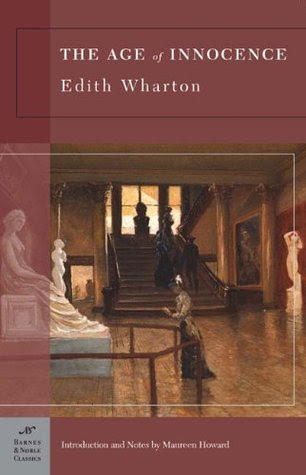
The Age of Innocence, Edith Wharton 


(First woman)Winner of the 1921 Pulitzer Prize, The Age of Innocence is Edith Wharton’s masterful portrait of desire and betrayal during the sumptuous Golden Age of Old New York, a time when society people “dreaded scandal more than disease.”

This is Newland Archer’s world as he prepares to marry the beautiful but conventional May Welland. But when the mysterious Countess Ellen Olenska returns to New York after a disastrous marriage, Archer falls deeply in love with her. Torn between duty and passion, Archer struggles to make a decision that will either courageously define his life—or mercilessly destroy it.

We will choose our next read from these books on Thursday 20th May when we meet to review our current book, The Librarian by Sally Vickers, at 8pm. I hope it is OK with everyone to meet via Zoom - the weather forecast is not great and we can't meet indoors so I have taken an almost unilateral decision on that. 

Friday, 23 April 2021

An Evening with Philip Bowne – Author of Cows Can’t Jump

Back in January I received this in an email: 

If your group would be interested in reading the book, I would be delighted to offer an online Author Q&A session for the group if they wish. It would be fun to enjoy a drink, discuss the novel’s themes, characters, and ask any questions they may have. All in all, I want it to be a bit of fun, to help bring people together during lockdown, and to help spread the word about my novel! Debuting in 2020 was – as you can imagine – a bit of a nightmare, as it’s so difficult to connect with readers. I’m hoping the book club can help with that. 

Who could decline such an offer? Not us! and so we chose to read Cows Can’t Jump and 10 of us met on Zoom with Philip Bowne (the author) and did exactly what he proposed above. 

As a group we approached the meeting in our usual open, chatty way. We didn’t meet beforehand to plan or structure our meeting but each of us had questions ready. That approach worked well and made for a relaxed, fun, evening.

Phil gave us a brief overview of his writing background and explained that this book started life as a short story written as part of his English Literature and Creative Writing course at Cheltenham Uni. The book was written in 2016/17, edited in 2018 and published in 2020. 

That was followed by a barrage of questions – well done Phil for keeping up with us. 

Why do you write in 1st Person? I find it easiest to write in 1st person, I like to be in the scene and have fun. 

How do you get into the psyche of another character? I wish I could tell you! One thing I do is write a conversation with all the characters in the room and they discuss a problem. 

How much of the story is autobiographical? No, it is 95% invention! Some scenes were based on ideas I really wanted to get into the story (such as Cristoph and the cows) and others were more difficult to imagine but necessary (such as the horse shooting). Phil did let us into the secret that one scene is about something he actually did himself, when he was at school (just the once). I am not going to go public on what that was!

Did you get caught up in writing the story? Or was it in fits and starts? I was driven and enthusiastic. I was writing every day and the first draft was completed in 9 months. I asked my uni. lecturers for input, then reworked the text. It was during editing that I won the Spotlight First Novel prize. 

How does it feel to get feedback from your peers? Authors generally give feedback in a nice way, so it was always good to seek feedback. 

What is your work with The Wombles? I write content for The Wombles. The content is digital right now (we are bringing them into the modern world) with TV and books in development. Many of us are of an age that we remember the originals, and Phil’s connection with The Wombles left some of us quite starstruck! And The Wombles Facebook page gained 10 new followers!

What qualities must an author have? Well, I am a good listener/eavesdropper and it is also important to have empathy.

How do you capture ideas? I jot them down. I have had many jobs that are customer facing and I listen to people all day. I see some of those people in this book. 

Would people recognise themselves in the book? I don’t think so but Sam, is Sam, I met him at Cheltenham Racecourse and he was the sweetest man I had ever met. 

Is Louis real? I based him on a character in a book I studied for A-Level (Long Day’s Journey into Night).

Surrounding the more direct questions put to Phil, we all shared our thoughts and feelings about the story. 


Here’s a summary of some of the conversation points and what we as a group concluded:

The ending of the book – we were pleased with this, it mirrored real life and what happens in real life relationships.

Themes – Phil explained his thoughts around some of the many themes that run through the book:

  • Gravedigging (we found that quite unique) – Phil wanted Billy’s journey to go from death to life (Eva is derived from the Hebrew meaning of ‘life’) and back again.  
  • Diana’s story is about having faith and belief and that what we believe isn’t always true!
  • Cows can’t jump – an urban myth but the story (and the title) came from a Daily Mail story https://www.dailymail.co.uk/news/article-1209638/Scientists-baffled-suicidal-cows-throw-cliff-Switzerland.html - the book was originally called ‘Chasing Eva’ but Cows Can’t Jump got a better reaction.
  • The journey through Europe – I love travelling and I did my research! This included a swim in the lake in the town of Bled in Slovenia which is now firmly on the ‘to do list’.

The characters – we all thought that Eva was terrible person and would not like to meet her; Billy was pathetic for much of the book but then surprised us. The thinking behind Diana and Christoph was beautiful, and we enjoyed meeting them both. Sam was wonderful and overall, we felt the relationships between the characters were really well defined. 

There were, we thought, some parts of the story that reminded us of other books we have read (and enjoyed) such as: The Hundred-Year-Old Man who Jumped Out of a Window and Alec Wood vs. the Universe. 

As a group we enjoyed this book and having the opportunity to get the behind the scenes took our appreciation of what goes in to writing a novel to another level. The story covers a lot of topics and has a good pace. The episodic style keeps the readers’ attention – things happen, problems arise and are either fixed or the story moves on. We could imagine it as a film or cartoon or even a graphic novel. 

So, would we recommend this book?  A big ‘Yes’ from everyone. For other Book Groups, we recommend you get in touch with Phil and invite him along. Here’s his website: https://philipbowne.com

The ladies of Ashendon Book Group would like to thank Philip Bowne for taking the time to join our meeting, for being so gracious and open in his answers to his questions and for joining in with our discussion. 

The next day I got this: “I just wanted to say thank you again to you all for taking the time to read my book and for allowing me to join in on the meeting. I had a lot of fun meeting you all last night - it makes the whole writing process feel worthwhile!” Phil Bowne.

I believe we can make him our first honorary member!

Our next read is The Librarian by Sally Vickers and we will meet to discuss this book on Thursday 20th May at 8pm. The rules change on Monday 17th May, when up to 30 people can meet outdoors, so please can everyone let me know how they feel about returning to the pub or meeting in a garden or continuing with Zoom and I will confirm venue about a week before. 

Tuesday, 23 March 2021

Book Choices to take us out of Lockdown!

The Second Sleep by Robert Harris

April 1468: The arrogant, newly ordained Christopher Fairfax is journeying to the remote Wessex village of Addicott St. George to perform a burial service, that of the village’s priest, Father Lacy. Dusk is gathering.

It's a crime to be out after dark, and Fairfax knows he must arrive at his destination - a remote village in the wilds of Exmoor - before night falls and curfew is imposed.

He's lost and he's becoming anxious as he slowly picks his way across a countryside strewn with the ancient artefacts of a civilisation that seems to have ended in cataclysm. 

What Fairfax cannot know is that, in the days and weeks to come, everything he believes in will be tested to destruction, as he uncovers a secret that is as dangerous as it is terrifying. 

The Librarian by Sally Vickers

Sylvia Blackwell, a young woman in her twenties, moves to East Mole, a quaint market town in middle England, to start a new job as a children's librarian. But the apparently pleasant town is not all it seems. Sylvia falls in love with an older man - but it's her connection to his precocious young daughter and her neighbours' son which will change her life and put them, the library and her job under threat.

How does the library alter the young children's lives and how do the children fare as a result of the books Sylvia introduces them to? 


Longbourn by Jo Baker

If Elizabeth Bennet had the washing of her own petticoats, Sarah often thought, she’d most likely be a sight more careful with them.

In this irresistibly imagined belowstairs answer to Pride and Prejudice, the servants take centre stage. Sarah, the orphaned housemaid, spends her days scrubbing the laundry, polishing the floors, and emptying the chamber pots for the Bennet household. But there is just as much romance, heartbreak, and intrigue downstairs at Longbourn as there is upstairs. When a mysterious new footman arrives, the orderly realm of the servants’ hall threatens to be completely, perhaps irrevocably, upended.

Jo Baker dares to take us beyond the drawing rooms of Jane Austen’s classic—into the often overlooked domain of the stern housekeeper and the starry-eyed kitchen maid, into the gritty daily particulars faced by the lower classes in Regency England during the Napoleonic Wars—and, in doing so, creates a vivid, fascinating, fully realized world that is wholly her own. 

We will choose our next read from these books on Thursday 25th March when we meet to review our current book, and meet the author: Cows Can't Jump by Philip Bowne on Zoom at 8pm

Monday, 22 March 2021

The Pants of Perspective by Anna McNuff

Twelve of us met to discuss this book, including 2 new ladies.

The initial response was mixed and initially the disgruntled group voice spoke loudest. Anna's seemingly disorganised and scatty approach to her running adventure annoyed and irritated members of our group. This prompted discussion about why she gave that impression? and that, in turn, led to consideration of how such an undertaking might feel and how that could lead one to appear somewhat flippant with regard to the enormity of the challenge. Perhaps, it was concluded, she didn't take the reality in, or she didn't want to take it all in?

Without any intention to pun, it seems what the reader takes from this book depends on their perspective. Some of us felt the risks that Anna took were irresponsible, others tried to understand her approach and process. The quality of the book can be judged by the quality of the writing or the qualities of an adventurer. Are we reading about why she was doing it, or what kept her going? There are so many angles to this story that, if nothing else, this is a book to talk about with friends. 

'I struggle to understand why she put herself through it' was countered by 'I learnt a lot from her and how she dealt with anxiety and physical problems.'

'How could she put herself through the pain?' - 'She is so totally focussed, has utter determination.'

'I was finally really annoyed - she didn't start running until 5 one day, eating cake in a coffee shop' vs. 'I liked that she wasn't pushing it - it made it more real.'

'She got on my nerves - I persevered but gave the book away.' - 'I deeply admired this woman, she was incredible. The sports psychology tips were really useful.'

'I was really anxious for this young, naive woman who had not thought it through.' - 'The Pants of Perspective are a great technique, and she had the foresight to plan new running shoes before she set off.'

So it seems, if you can see beyond the poor editing (and the resultant numerous 'inhalations' of food) and recognise that this is a better book than The Island by Victoria Heslop! then Anna shines through as an inspirational woman. She wasn't afraid to try, wants to achieve, is not an over-confident 'alpha' and is simply prepared to do seemingly impossible/stupid/ridiculous things. 

So did we enjoy this book? 9 of us did and 7 of us would read it (or another by Anna McNuff) again. 

Would we recommend this book? 10 would and 2 wouldn't.

As our conversation moved on to other things, one little voice said 'I'm so far from understanding it...'.

Our next read is Cows Can't Dance by Philip Bowne and Philip will join us on Thursday 25th March at 8pm when we will discuss our experience of reading his first novel and put our questions to him. 


Monday, 15 February 2021

Book Choices for Spring

Every now and then I get a round robin email from a self-promoting author. They are rarely interesting. In January, however, I received a nicely put together, well targeted message from an author named Philip Bowne: 

I hope you’re keeping well and enjoying a good start to 2021. I also hope that you won’t mind me writing out of the blue - I found your details on the Reading Groups for Everyone website, while I was searching for book clubs in the Ox/Bucks area. I’m a local author - I grew up in Bicester. My first novel Cows Can’t Jump was published last September.

When this most recent lockdown in the UK was announced, I decided to reach out to Book Clubs and offer an Author Book Club, to share my writing and hopefully provide a much needed boost for people. My debut novel Cows Can’t Jump was published at the end of 2020. It’s a fun coming-of-age story that transports the reader across central Europe. It won the Spotlight First Novel Prize and was shortlisted for The Guardian’s Not the Booker Prize. 

One of the great disappointments of publishing my debut during the pandemic has been the inability to connect with readers. I am hoping that this might go some way in remedying that! 

If your group would be interested in reading the book, I would be delighted to offer an online Author Q&A session for the group if they wish. It would be fun to enjoy a drink, discuss the novel’s themes, characters, and ask any questions they may have. All in all, I want it to be a bit of fun, to help bring people together during lockdown, and to help spread the word about my novel! Debuting in 2020 was – as you can imagine – a bit of a nightmare, as it’s so difficult to connect with readers. I’m hoping the book club can help with that. 

If you are interested in finding out a bit more information, I’d be more than happy to discuss further! For a little more information on the book and myself: https://philipbowne.com

So I got in touch, explained how we choose our books and promised to pass his book details to Sue. We batted a couple of emails back and forth and agreed on 2 possible dates, for his book club idea, if we we would like to give his book a go: 25th March or the 8th April

If we decide we are up for a meeting with Phil, then this is the book. 

Cows Can't Dance by Philip Bowne

How far would you go for love?

Winner of the Spotlight First Novel prize, Philip Bowne's debut novel is an explosive coming-of-age odyssey. 18-year-old Billy is desperate to leave home. He's working the ultimate dead-end job as a grave-digger. His Grandad's engaged to a woman half his age, his Dad's become obsessed with boxing, and his Mum's certainly having an affair. Everything is changing, and Billy hates it.

Meeting the older, mysterious Eva, though, changes everything. She's passionate about Russian literature, Gary Numan, windfarms and chai tea, and Billy gambles everything for a chance to be with her. His scramble across Europe involves hitch-hiking with truckers, walking with refugees, and an encounter with suicidal cows. But the further he goes, the harder it is to be sure what he's chasing - and what he's running from.

This book is for everyone who wants to break out and follow their dreams.

By way of back up, or add on, we have 2 other books to consider:

Goodbye to Berlin by Christopher Isherwood

First published in 1939, this novel obliquely evokes the gathering storm of Berlin before and during the rise to power of the Nazis. Events are seen through the eyes of a series of individuals, whose lives are all about to be ruined.

Goodbye to Berlin, evokes the glamour and sleaze, excess and repression of Berlin society. Isherwood shows the lives of people under threat from the rise of the Nazis: a wealthy Jewish heiress, Natalia Landauer, a gay couple, Peter and Otto, and an English upper-class waif, the divinely decadent Sally Bowles.


Vesper Flights by Helen MacDonald

Animals don't exist to teach us things, but that is what they have always done, and most of what they teach us is what we think we know about ourselves.

From the bestselling author of H is for Hawk comes Vesper Flights, a transcendent collection of essays about the human relationship to the natural world.

Helen Macdonald brings together a collection of her best-loved writing along with new pieces covering a thrilling range of subjects. There are essays here on headaches, on catching swans, on hunting mushrooms, on twentieth-century spies, on numinous experiences and high-rise buildings; on nests and wild pigs and the tribulations of farming ostriches.

Vesper Flights is a book about observation, fascination, time, memory, love and loss and how we make the world around us. Moving and frank, personal and political, it confirms Helen Macdonald as one of this century's greatest nature writers.

We will meet to discuss our current book: The Pants of Perspective by Anna McNuff at 8pm on Thursday 18th February by Zoom. We can decide then on Phil's offer to meet and whether to read one book, or perhaps two over the coming Spring months.