Tuesday, 28 July 2026

The Retired Assassin’s Guide to Country Gardening by Naomi Kuttner

Eight of us met to discuss this book, and what an evening of surprises it turned out to be.

Some members of the group had decided not to read it because it simply wasn’t “their sort of book” and the pre-meeting vibe led some to assume “the more bookish of us will pull it apart.” Another confessed she had warned a fellow member that it was “no great work of literature – it’s no Dickens!” In short, we thought the book would 'bomb'. 

In fact, the “bookish” amongst us were already swapping copies of the second book in the series. One happily described it as “frothy”, another admitted, “I like an easy read”, and before long there were smiles all round as we realised just how much fun we were having.

As we got to know the characters, we were won over by this first book in the trilogy. It was described as hilarious, gloriously cheesy, refreshingly different, a humorous romp and, above all, a very pleasant surprise. Several of us commented that it had shades of Richard Osman.

Our verdict on the characters?

  • Dante became increasingly human. The smiles, the cat and his growing vulnerability all helped to soften him.
  • Charlie was simply endearing.
  • The ghosts divided opinion. Some of us loved them, others were more cynical, but we agreed the story simply wouldn’t have worked without them.
  • Inspector Williams and Eleanor had just enough un frisson between them to make us think the Inspector may yet grow on us.
  • The AA mentor was universally loved. Both the character and the concept of Assassin Anonymous meetings were inspired.
  • The Hells Angels were a wonderfully random addition.
  • The Council turned out to be shockingly corrupt.
  • Ted received an emphatic collective BOO!

The ghosts sparked one of those wonderfully unexpected Ashendon Book Group conversations. Do we believe in ghosts? Stories were shared of unusual or unexpected visions, sounds and feelings. Even our own pub featured, with accounts of someone brushing past and of an electric candle spectacularly exploding, witnessed by two people who would not be described as fanciful.

That, in turn, led us onto another local story about The Red Lion in Ashendon once being used as the village courthouse. I’ll add that tale at the end of this review.

Then came Sue the Sleuth. Our resident eagle-eye spotted what she described as a “mahoosive” error that left her fuming for several days.

Drum roll…

After Dante’s tyres are slashed, he tells Eleanor to “bring four tyres.”

Four tyres? Surely, he needed four wheels - unless they had tyre-fitting equipment handy, or this retired assassin planned to fit them with his teeth!

It’s the sort of detail most readers would skim straight past, but not our Sue. We all agreed it was quite an oversight… unless, of course, the author is secretly a cyclist and, in which case, it was a forgivable error.

Any book that persuades a room full of readers – including several who began rather sceptically – to immediately seek out the sequel has clearly done something right. Naturally, that led us to want to know more about the author.

One of our group remembered reading that Naomi Kuttner – who also cites Richard Osman among her influences – wrote her first novel while raising newborn twins. She described the experience as writing "in between keeping my twins alive", a wonderfully honest image of life at the time. It perhaps also explains her tongue-in-cheek observation that sleep deprivation and small children are enough to make anyone understand the appeal of fictional murder!

Would we recommend this book? Well, any book that can persuade a room full of readers - some initially rather sceptical - to immediately seek out the sequel has clearly done something right.

All in all, this was a refreshingly funny, thoroughly entertaining page-turner, and a perfect reminder that you really should never judge a book by its cover. Several of us arrived expecting very little and left wondering how soon we could get our hands on Book Two. That’s probably the best recommendation any book can receive.

Our next read is The Names by Florence Knapp, and we will meet at The Ash Tree to discuss this book on Thursday, September 24th at 8pm.


As promised, here is a little Ashendon history footnote - nothing to do with pub ghosts but it is quite a story in itself …

Our discussion about ghosts wandered - as our conversations often do - onto local history.

Whilst researching the history of our own pub, Teresa discovered that The Red Lion, Ashendon, once served as the Ashendon Petty Sessions, where local magistrates heard cases.

One particularly colourful case was reported in the Aylesbury News of 22 February 1840.

The report tells of an extraordinary falling-out between the outspoken Vicar of Long Crendon, the Rev. Thomas Hayton, and Dr Lupton of Thame. Angry words, accusations, a raised stick, a brandished whip all featured in the evidence. The desired outcome was the right to hold a duel. After a five-hour hearing at The Red Lion, the magistrates failed to reach a decision.

It’s good to think that, nearly two centuries later, we now gather in the same building to debate fictional misdemeanours instead. The transcript from Aylesbury News below makes for an entertaining read, in its own right!


I wanted to understand the deeper story, so here is what I found.

Behind the 1840 Aylesbury News reporting on Henry Lupton reveals an incredibly messy, overlapping cocktail of medical corruption, physical assault, and class warfare typical of Victorian local politics.

The two separate but connected disputes that caused the newspaper to launch this scathing public attack provide context on what went down:

1. The Medical Election Dispute: The Battle for Thame Union
The friction began under the New Poor Law of 1834. Before this, wealthy parish landowners personally paid doctors to look after the poor. The new law stripped away this power and handed it to "Boards of Guardians"- corporate local authorities who put parish medical contracts out to public bid. Henry Lupton and his medical partner/stepson, Henry Wells Reynolds, were entrenched Tory elites in Thame. They treated the local medical contract as an entitlement. However, a local coalition of Whig reformers and independent guardians successfully voted them out of the Thame Poor Law Union contract.

The Fallout: Lupton’s faction lost a highly lucrative, prestigious medical income stream to rival doctors.
The Grudge: Lupton and his Tory allies blamed the Whig political machine - specifically the surrounding landowning Whig gentry - for orchestrating what they saw as an "insulting" professional demotion.

2. The Assault Case: Bad Blood at the Quarter Sessions
The petty legal case mentioned in the Aylesbury News was the culmination of this political pressure cooking over into real life. In 1840, Henry Lupton was brought before the Buckinghamshire Quarter Sessions on charges of assault. Lupton, known locally for a short fuse, had physically confronted a local political enemy or poor law officer in public.
The Aylesbury News - which was a radically pro-Reform, pro-Whig newspaper published by Robert Gibbs - practically threw a party in print. Because the Duke of Buckingham (owner of Wotton House) ran the county's Tory political machine like an absolute dictator, the Whig editors used Lupton's criminal behaviour as a stick to beat the Duke with.

The newspaper essentially told its readers: "Look at the thuggish behaviour of the Duke's loyal local Tories. Henry Lupton, a supposedly respectable gentleman and author, is nothing more than a common brawler when he doesn't get his way.

Why Wotton House is Named: The explicit mention of Wotton House in a story about an unrelated Thame surgeon was purely a satirical political hit. The Duke's youngest son, Lord George Grenville (Lord Nugent), was actually a famous Whig radical who frequently broke ranks with his conservative family. By framing Lupton's legal drama right against the shadow of the Wotton House estate, the newspaper was mocking the elite family's inability to control their own local party partisans and highlighting the deep hypocrisy of the Tory "gentlemen."


Thursday, 16 July 2026

Whale Fall by Elizabeth O'Connor

Eleven of us met to discuss Whale Fall and, as always, the conversation took us in some unexpected directions.

When a whale dies at sea, it slowly sinks to the ocean floor, becoming the centre of an entire ecosystem. This whale, however, does not fall – it is stranded on the beach, beyond saving, and is left by the small island community to die and decompose.

We spent some time discussing this. Why were the islanders so drawn to the whale, yet made no attempt either to save it or use it for food? We concluded that this reflected the realities of island life and the community's acceptance of the natural order. Some of us also wondered whether the whale itself was an allegory for the island – isolated, slowly declining and clinging on despite an uncertain future. Others felt the whale was there as a timeline or a parallel to the unfolding story. 

Opinions on island life were divided. Some of us found it enchanting, while others found it bleak. Comments ranged from, "I could have happily lived there – I was born in the wrong era!" to, "I found it rather depressing; it left me feeling quite low."

Whatever our feelings about the setting, we all agreed that Elizabeth O'Connor's writing is beautifully evocative. It is a quiet, slow-moving novel, but one that completely immerses the reader. We liked the short chapters, which made the book easy to dip into and kept the story moving despite its gentle pace.

Set during the final four months of 1938 on a tiny island just a few miles off the Welsh coast, the story follows 18-year-old Manod, who lives with her fisherman father and younger sister, Llinos, who speaks only Welsh and is described as being almost "half-elf". Their mother died several years earlier, and her story is revealed only towards the end of the novel, adding another layer to the family's history.

Manod has taught herself English from magazines and has a talent for embroidery, but beyond that her experience of the world is limited. Having spent her whole life on the island, she is sheltered, naïve and vulnerable.

The beached whale brings unexpected visitors: Edward and Joan, two anthropologists from Oxford University. They employ Manod to help with their research, but none of us warmed to them. We felt they exploited both Manod and the islanders, manipulating situations to make the community appear more mysterious and exotic to enhance their own work, with little regard for the consequences for those whose lives they were documenting.

Life on the island revolves around the church, its traditions and its close-knit community. We were particularly fascinated by the tradition of the Mari Lwyd. Yet change is inevitable. The population is no longer sustainable, young people are already leaving, and the looming threat of the Second World War raises fears of occupation. Manod herself begins to wonder whether her future lies beyond the island.

Several of us reflected on how remarkable it is that a place lying only a few miles from the mainland could feel so isolated.

Our discussion also turned to other remote island communities that some members have visited, particularly the Blasket Islands, abandoned in 1953, and St Kilda, whose final residents left in 1930, famously having to drown their sheepdogs before boarding the evacuation boat. Both provide poignant reminders of communities that ultimately became unsustainable, much like the future we sensed awaited Manod's island.

Would we recommend this book? Yes - it is interesting and gives an insight into community and social history. The writing is great. 

Elizabeth O'Connor has spoken in interviews about both the novel and its setting. When asked to describe Whale Fall in just three words, she chose Wild, Atmospheric and Elegiac. Having discussed the book, it's hard to disagree.

Click here for an interview with Elizabeth.


Monday, 13 July 2026

Book Choices July 2026

 The Names by Florence Knapp

It is 1987, and in the wake of a great storm, Cora sets out with her young daughter to register the birth of her son. Her husband expects her to follow tradition and call the baby after him - but is it right for her child to inherit his name from generations of domineering men? Her choice will shape the course of their lives.

Seven years later, her son is Bear, a name chosen by his sister, hoping he will grow up to be brave and big-hearted. Or he is Julian, the name his mother set her heart on, keen for him to become his own person. Or he is Gordon, named after his father and raised in his cruel image - but is there still a chance to break the mould?

Powerfully moving and full of hope, this is the story of three names, three versions of a life, and the infinite possibilities that a single decision can spark.


One of Us by Elizabeth Day

In this compulsive story of betrayal, old bonds and buried scandals, one British establishment family comes face to face with the consequences of privilege and the true cost of power.

Martin and Ben were friends for decades — best friends, Martin would have said — before the terrible events at Ben’s 40th birthday party tore them apart. So when Martin receives a surprise invitation back into the inner sanctum of the dazzling Fitzmaurice family after seven years of silence, he can’t resist the chance to get his revenge.

Ben has risen through the ranks of power, and is now touted as the next Prime Minister. But Martin can’t help but notice certain flies in the ointment… Ben’s wife, Serena, for instance, whose privileged existence is beginning to feel like a gilded cage. Or their daughter, Cosima, an environmental activist fighting against everything her parents once stood for. Or the disgraced MP Richard Take, determined to make his big comeback. And then there’s Fliss, the Fitzmaurice black sheep, whose untimely death sparks more suspicion than closure. Through their intertwined stories, we see a family – and a nation – unravelling under the weight of its secrets.

With everyone watching, the stage is set for a reckoning. It's time for Martin and Ben to confront what love truly means when everything—family, power, and loyalty—is on the line.

Frankie by Graham Norton

Always on the periphery, looking on, young Frankie Howe was never quite sure enough of herself to take centre stage - after all, life had already judged her harshly. Now old, Frankie finds it easier to forget the life that came before.

Then Damian, a young Irish carer, arrives at her London flat, there to keep an eye on her as she recovers from a fall. A memory is sparked, and the past crackles into life as Damian listens to the story Frankie has kept stored away all these years.

Travelling from post-war Ireland to 1960s New York - a city full of art, larger-than-life

characters and turmoil - Frankie shares a world in which friendship and chance encounters collide. A place where, for a while, life blazes with an intensity that can't last but will perhaps live on in other ways and in other people. But as Frankie's past slowly emerges, her spirit and endurance are revealed as undeniable . . . and unforgettable.

Tuesday, 12 May 2026

Book Choices May 2026

Book Choices for Spring 2026

Yippee - Book  Group time again. We are meeting on Thursday, 14th May, 8pm at The Ash Tree, Ashendon, to discuss Whale Fall by Elizabeth O’Connor. Here are our choices for our Summer read - have a ponder and be ready with your thoughts on Thursday!


Horse by Geraldine Brooks

Based on the remarkable true story of the record-breaking thoroughbred, Lexington, who became America’s greatest stud sire, Horse is a gripping, multi-layered reckoning with the legacy of enslavement and racism in America.

Kentucky, 1850

An enslaved groom named Jarret and a bay foal forge a bond of understanding that will carry the horse to record-setting victories across the South. When the nation erupts in civil war, an itinerant young artist who has made his name on paintings of the racehorse takes up arms for the Union.

On a perilous night, he reunites with the stallion and his groom, very far from the glamour of any racetrack.

New York City, 1954

Martha Jackson, a gallery owner celebrated for taking risks on edgy contemporary painters, becomes obsessed with a nineteenth-century equestrian oil painting of mysterious provenance.

Washington, DC, 2019

Jess, a Smithsonian scientist from Australia, and Theo, a Nigerian-American art historian, find themselves unexpectedly connected through their shared interest in the horse - one studying the stallion’s bones for clues to his power and endurance, the other uncovering the lost history of the unsung Black horsemen who were critical to his racing success. 

The Retired Assassin's Guide to Country Gardening

Dante is a reluctant assassin trying (and failing) to live a quiet life. He has come to the small coastal town of Te Kohe, New Zealand, for a fresh start in life. But he doesn't want to open a BnB, or save a charming bookshop, or start a romance with a single mother in need of rescuing.

He just wants to forget about his past career (which involved a lot of dead bodies) and have everyone leave him alone. 

Unfortunately for Dante, life has other plans... 


Untold Stories by Alan Bennett

 The astonishing sequel to Alan Bennett's classic Writing Home, updated for   paperback. Untold Stories contains significant previously unpublished work,   including a poignant memoir of his family and of growing up in Leeds,   together with his much-celebrated diary for the years 1996-2004, and   numerous other exceptional essays, reviews and comic pieces. Bennett, as   always, is both amusing and poignant, whether he's discussing his modest   childhood or his work with figures such as Maggie Smith, Thora Hird and   John Gielgud. 


Friday, 10 April 2026

That Bonesetter Woman by Frances Quinn

Book Group Review – Spring 2026

Eleven of us gathered at The Ash Tree to share our thoughts on our Spring 2026 read, That Bonesetter Woman. From the outset, reactions were strikingly mixed, ranging from “awful” to “enjoyable,” with “predictable” and the ever-debatable “feel-good read” (delivered with knowing air quotes) also firmly in the mix. As is often the case, such varied responses made for a lively discussion.

First Impressions and Comparisons

For some, disappointment stemmed from expectations shaped by our previous read, another historical novel, The Art of a Lie by Laura Shepherd-Robinson. Laura’s meticulous research set a high bar, and comparisons were inevitable. The ‘awful’ response to This Bonesetter Woman came from feeling that the book did not align with the literary or historical depth they had hoped for, and this perception influenced their view of the research quality. Frances Quinn's career background, outlined in her author biography, 

A Lighter Reading Experience

Others, however, enjoyed the novel for what it offered: an accessible, fast-paced story that did not demand intense concentration. It was described as an easy, enjoyable read that moved along briskly and provided entertainment without being overly taxing.

Predictability and Themes

A recurring point of discussion was the book’s predictability, with the narrative developments being easy to anticipate as new threads emerged. However, this did not entirely detract from the reading experience. Set in 1750s London, the novel explores the challenges faced by a female bonesetter in a male-dominated medical world. While the prejudice she encounters is unsurprising given the historical context, it is a powerful element of the story. 

The Story and Its Characters

At its heart, the novel follows Durie, a woman who discovers both purpose and satisfaction in treating skeletal injuries. Having learned her skills from her father, a rural bonesetter, she builds a practice in London while navigating social and professional obstacles. Her refusal to compromise her ethics, even in the face of success, was widely admired.

Durie herself was loosely based on the historical bonesetter Sarah Mapp, also known as “Crazy Sally”, which was one of the most warmly received aspects of the book. Portrayed as physically ungainly and unapologetically indifferent to social expectations, she won our respect for her confidence, skill, and integrity. Despite working without the benefit of modern medical tools and education, her intuitive, hands-on approach resonated with many of us; several members remarked that they would happily trust her with their own ailments.

Other characters prompted more divided opinions:

  • Lucinda was widely dismissed as frivolous and lacking substance – a “silly cow”. 
  • Aunt Ellen sparked debate: was she manipulative or simply protective? The consensus leaned toward the latter, though perhaps with a tendency toward overprotection and occasional misjudgement. Her entrepreneurial spirit and desire for her nieces’ independence were seen positively. 
  • Durie’s father divided opinion, with some viewing him as chauvinistic while others saw him as a man trying to accommodate his new wife. 
  • Malachy was broadly disliked, though his role in the story felt unsurprising. 
  • The doctors were criticised for their lack of ethics, in stark contrast to Durie’s principled approach. 
  • George, on the other hand, was universally regarded as a true gentleman. 

Would we recommend this book?

Despite the range of opinions, the group reached a strong consensus: “YES” - while it may not satisfy those seeking rigorous historical depth, it succeeds as an engaging and uplifting read. Many of us agreed we would be open to reading more from Frances Quinn in the future.

Our next read is: Whale Fall by Elizabeth O’Connor. We look forward to meeting again on Thursday, 14th May at 8pm, once more at The Ash Tree, for more stimulating discussion.


Tuesday, 10 March 2026

Book Choices for Spring 2026

Raising Hare by Chloe Dalton

Imagine you could hold a baby hare and bottle-feed it. Imagine that it lived under your roof and lolloped around your bedroom at night, drumming on the duvet cover when it wanted your attention. Imagine that, over two years later, it still ran in from the fields when you called it and snoozed in your house for hours on end. This happened to me.

When lockdown led busy professional Chloe to leave the city and return to the countryside of her childhood, she never expected to find herself custodian of a newly born hare. Yet when she finds the creature, endangered, alone and no bigger than her palm, she is compelled to give it a chance at survival.

Raising Hare chronicles their journey together and the challenges of caring for the leveret and preparing for its return to the wild. We witness an extraordinary relationship between human and animal, rekindling our sense of awe towards nature and wildlife. This improbable bond of trust serves to remind us that the most remarkable experiences, inspiring the most hope, often arise when we least expect them.

Mrs England by Stacey Halls


West Yorkshire, 1904. When newly-graduated nurse Ruby May takes a position looking after the children of Charles and Lilian England, a wealthy couple from a powerful dynasty of mill owners, she hopes it will be the fresh start she needs. But as she adapts to life at the isolated Hardcastle House, it becomes clear there's something not quite right about the beautiful, mysterious Mrs England.

Ostracised by the other servants and feeling increasingly uneasy, soon a series of strange events will force Ruby to question everything she thought she knew . . .

Simmering with slow-burning menace, Mrs England is a portrait of an Edwardian marriage, weaving an enthralling story of men and women, power and control, courage, truth and the very darkest deception. Set against the atmospheric West Yorkshire landscape, Stacey Halls' third novel proves her one of the most exciting and compelling new storytellers of our times.

Whale Fall by Elizabeth O’Connor


It is 1938, and on an island off the coast of Wales, Manod is trying to imagine her future. Her choices are stark: she must either stay and look after her father's house, in the wild landscape that drove her mother to madness, or marry and leave.

And so, when two English anthropologists arrive on the island, Manod senses the possibility of a thrilling new life. But, as she becomes entangled in their work and their strange relationship, the outside world she had yearned for appears a much darker place than she could ever have imagined.

We will meet at 8pm on Thursday, 12th March at The Ash Tree, Ashendon, to discuss our current book - That Bonesetter Woman by Frances Quinn, and then choose our next read. 


Saturday, 24 January 2026

A Gentleman in Moscow by Amor Towles

Six of us met to discuss A Gentleman in Moscow, with many thanks to Isalda for hosting. Everyone enjoyed the book, and four described their initial reaction as “loved it.” It was, quite unanimously, a joy to read.

Feedback from members who were unable to attend closely mirrored the discussion on the night, so we hope this summary reflects the wider group view. Those who had read the novel agreed that it was even better on a second reading, with its detail, humour, and depth revealing themselves more fully over time.

We were struck by how remarkable it is that such a long, rich novel could be written about a man confined for decades to a single building — albeit a very grand one. That feat alone speaks volumes about Amor Towles’s skill and imagination.

Although this is a work of fiction, it is firmly grounded in historical reality. The novel captures the societal upheaval and political shifts of post-Revolutionary Russia with great care. Set between 1922 and the 1950s, it reflects the fate of the landed nobility after 1917 — stripped of titles, property, freedom, and often far worse. While Count Alexander Ilyich Rostov is fictional, the world he inhabits feels meticulously researched and historically credible.

Placed under house arrest in Moscow’s Metropol Hotel in 1922, the Count initially faces the shock of losing his privileged life — including his family suite — and adjusting to drastically reduced circumstances. At first, we worried about him. But it quickly becomes clear that the Count is made of strong stuff, and his character gave us plenty to talk about.

As he moves from the shock of confinement to fully inhabiting his new reality, his strengths become clear. Though stripped of title, wealth, and freedom, he retains his dignity, refusing to compromise his manners, morals, or values. He lives a life defined by decency, culture, and responsibility to others. In return, he earns respect, friendship, family, and love — all within the unlocked doors of what becomes his carefully constructed micro-world.

This micro-world is sustained through routine: daily exercise, visits to the barber, dining, one fruit at breakfast, meaningful work, friendships, and vital connections to the outside world through those who are not confined as he is. 

We drew an interesting comparison with Viktor Navorski, the character played by Tom Hanks in The Terminal. Viktor is stranded in JFK Airport after a political coup renders his visa invalid. Like Count Rostov, he must adapt to confinement, gradually transforming an overwhelming crisis into a liveable, even meaningful, existence. Both characters show resilience, optimism, humility, and a willingness to take on work that allows them to both give and receive kindness. Each makes the world they are trapped in function for them.

Turning back to the novel, we discussed Towles’s depiction of the Bolshevik movement. Rather than direct condemnation, he uses humour and satire to powerful effect. We particularly loved the de-labelling of wine and the ceremony surrounding the bouillabaisse — hilarious examples of how culture survives even when its names are erased. The Count’s careful adaptation of his reduced living space felt like a quiet act of defiance, as did his continued insistence on taste, ceremony, and care.

Other characters illustrate the new regime more starkly — notably The Bishop, promoted beyond his competence due to party loyalty, and ultimately unsuccessful in his attempts to extinguish the Count’s influence. There are also darker moments: the disappearance of those who resist, the suppression of talent, and the unintended consequences of political interference in areas that once worked well, such as farming.

The ending was not what many of us expected, but beautiful. 

We also picked up a new favourite game: Zut alors! a quick-fire naming game played by the Count and Sofia:

One player calls out a category e.g. “Three green things,” “Three things you’d find in a kitchen,”   “Three things that float,” etc.
The other player must immediately name three correct examples
Hesitation, repetition, or an incorrect answer means failure
When the player fails, the other calls out “Zut alors!”

There’s no formal scoring system — the point is speed, fluency, and fun, not winning.

Our discussion sparked personal memories too, including visits to the USSR/Russia — from a 1970s school trip with lunch at the Metropol and a Kremlin tour, to a 1990s visit promoting a language school, staying in a large hotel overlooking the Kremlin. These reflections added another layer to our experience of the book.

Finally, we wondered whether the novel could — or should — be adapted for the screen. We felt it would need to be a very long film. As it turns out, Paramount+ agreed and produced A Gentleman in Moscow as an 8-part series. The jury is still out on whether we’ll watch it — the consensus being that the book is almost certainly better than anything a screen adaptation could achieve.

Would we recommend this book? Absolutely — yes.

Our next read is That Bonesetter Woman by Frances Quinn. We’ll meet to discuss it at 8pm on March 12th, 2026, at The Ash Tree, Ashendon.


Monday, 19 January 2026

Book Choices to Kick Off 2026


We will meet on Thursday, 22nd January, 8pm at Isalda's home in Brill, to discuss 'A Gentleman in Moscow' by Amor Towles.

Isalda has put directions on the Ashendon Book Group WhatsApp Group.

Here's the choices for our next read:

That Bonesetter Woman by Frances Quinn

It’s usual, they say, for a young person coming to London for the first time to arrive with a head full of dreams. Well, Endurance Proudfoot did not. When she stepped off the coach from Sussex, on a warm and sticky afternoon in the summer of 1757, it never occurred to her that the city would be the place where she’d make her fortune; she was just very annoyed to be arriving there at all.

Meet Endurance Proudfoot: clumsy as a carthorse, strong as an ox, with a tactless tongue and a face she’s sure only a mother could love. Durie wants one thing in life: to become a bonesetter like her father. It’s physically demanding work, requiring nerves of steel, and he’s adamant it’s not a job for a woman.

Strong-willed and stubborn, Durie’s certain that in bonesetting, her big, usually clumsy hands have found their natural calling. So when she’s bundled off to London with her beautiful sister, she won’t let it stop her from realising her dream. As her sister finds fame on the stage, Durie becomes England’s most celebrated bonesetter – but what goes up must come down, and her success may become her undoing.

Inspired by the true stories of two of Georgian England’s most famous celebrities, That Bonesetter Woman is an uplifting tale about finding the courage to go your own way, when everyone says you can’t – and about realising that what makes you different can also make you strong.


Paris Echo by Sebastian Faulks

Here is Paris as you have never seen it before – a city in which every building seems to hold the echo of an unacknowledged past, the shadows of Vichy and Algeria.

American postdoctoral researcher Hannah and a runaway Moroccan teenager Tariq have little in common, yet both are susceptible to the daylight ghosts of Paris. Hannah listens to the extraordinary witness of women who were present during the German Occupation; in her desire to understand their lives and through them her own, she finds a city bursting with clues and connections. Out in the migrant suburbs, Tariq is searching for a mother he barely knew. For him, in his innocence, each boulevard, Métro station and street corner is a source of surprise.

In this urgent and deeply moving novel, Faulks deals with questions of empire, grievance, and identity. With great originality and dark humour, Paris Echo asks how much we really need to know if we are to live a valuable life.


The Cat and The City by Nick Bradley

In Tokyo – one of the world’s largest megacities – a stray cat is wending her way through the back alleys. And, with each detour, she brushes up against the seemingly disparate lives of the city-dwellers, connecting them in unexpected ways.

But the city is changing. As it does, it pushes her to the margins where she chances upon a series of apparent strangers – from a homeless man squatting in an abandoned hotel, to a shut-in hermit afraid to leave his house, to a convenience store worker searching for love. The cat orbits Tokyo’s denizens, drawing them ever closer.


Tuesday, 2 December 2025

The Art of a Lie by Laura Shepherd-Robinson

Eight of us met to discuss this historical novel. Unusually, two members had hardback copies of the book - one even signed by the author.

Some of us listened to the audiobook, and opinions on the narration were mixed, ranging from “fantastic” to “a little over-acted.” We agreed to differ and moved on with the discussion.

The historical notes included in the book were widely appreciated, adding an extra layer of depth to the reading experience. One member had also read Laura Shepherd-Robinson’s Blood and Sugar, set in Victorian London, and highly recommended it. Her other novels were also noted for their thorough research.

For many of us, the sourcing of ice was a real eye-opener. It was fascinating to learn that as early as 1749, it was possible to obtain enough ice to make ice cream.

We felt the story was very cleverly constructed, with key plot elements revealed early on, followed by numerous twists that kept us engaged. We found ourselves wondering how the author planned such a credible and intricate storyline.

The narrative carried us along at a good pace, helped by short, sharp chapters. At times, however, it felt slightly surreal that an ordinary woman could integrate so seamlessly into upper-class society.

We particularly enjoyed the cultural details woven throughout the story, such as the tradition of wearing purple during mourning. 

The inclusion of real historical figures and places added to the novel’s authenticity. For example, Henry Fielding, both an author and the founder of the Bow Street Runners, played a convincing role.

Some themes felt strikingly modern. Scamming, for instance, may have changed in form, but it clearly isn’t a new phenomenon. 

We were also intrigued by the vivid description of a wine shop in (what we believe to be) Ranleigh Gardens, which still exists today.

Unsurprisingly, the mention of ice cream sparked a brief but enthusiastic detour into discussing our favourite flavours and beloved ice cream shops!

The language prompted some discussion. While the use of strong swear words (including the ‘c’ word) was not universally appreciated, we acknowledged that they were historically accurate and likely appropriate for the time.

The ending felt rather sudden and was the only aspect that disappointed us slightly - it seemed to come somewhat out of the blue.

We ended by discussing when we could find time for a group trip to St James' London to take a look around the setting for the story, so much of which we feel will still be recognisable today. This remains work in progress!

Would we recommend this book? A unanimous YES! 

Monday, 17 November 2025

Book Choices to Close 2025

We will meet on Thursday, 20th November, 8pm at The Ash Tree, Ashendon, to discuss 'The Art of The Lie' by Laura Shepherd-Robinson.

Here are the choices for our next read: 

Femina by Janina Ramirez

Giving voice to the influential women of the Middle Ages who have been silenced by male gatekeepers, Ramirez's sweeping account not only highlights unjustly forgotten pioneers but also demonstrates how easily historical narratives can be manipulated.

The Middle Ages are seen as a bloodthirsty time of Vikings, saints and kings: a patriarchal society which oppressed and excluded women. But when we dig a little deeper into the truth, we can see that the 'dark' ages were anything but. 

Oxford and BBC historian Janina Ramirez has uncovered countless influential women's names struck out of historical records, with the word FEMINA annotated beside them. As gatekeepers of the past ordered books to be burnt, artworks to be destroyed, and new versions of myths, legends and historical documents to be produced, our view of history has been manipulated.

Only now, through a careful examination of the artefacts, writings and possessions they left behind, are the influential and multifaceted lives of women emerging. Femina goes beyond the official records to uncover the true impact of women like Jadwiga, the only female King in Europe, Margery Kempe, who exploited her image and story to ensure her notoriety, and the Loftus Princess, whose existence gives us clues about the beginnings of Christianity in England. See the medieval world with fresh eyes and discover why these remarkable women were removed from our collective memories.                               


In All Day Long by Joanna Biggs

The average person spends 100,000 hours of their life at work, but how much do we really know about what we do with it? What is it really like to work in advertising, to be a train driver, a sex worker or an orthodox rabbi? What do we do in our working hours, and how does that colour our life, beliefs and happiness? And what happens to how we feel about work in a recession?

Joanna Biggs finds the answers to these questions and more by talking to the interns and bosses, professionals and entrepreneurs, and thinkers and doers who make up the workforce. Her journey takes us from Parliament to the long grassed fields of the Outer Hebrides, from a hospital in Wales to the wings of the Royal Opera House, introducing us to the different worlds of work and the people who inhabit them.

Full of human detail and street-level observation, Joanna Biggs' writing combines genuine empathy with social, cultural and political awareness. Like Studs Terkel's classic book 'Working' did several decades ago in America, her book paints a portrait of the UK right now, showing us who we are through what we do.


A Gentleman in Moscow by Amor Towles


In 1922, Count Alexander Rostov — an aristocrat who has never worked a day in his life — is sentenced by a Bolshevik tribunal to house arrest in Moscow’s grand Metropol Hotel. Instead of being executed or exiled like many of his peers, he must live out his days in a tiny attic room, forbidden ever to step outside.

What follows is a beautifully written, warm, and often humorous story about how a man stripped of his freedom learns to build a full and meaningful life within 4 walls. Over the decades, the Count forms deep friendships with the hotel staff, a precocious young girl, and unexpected companions who challenge and enrich him. Through dinners, conversations, small adventures and changing political tides, he discovers that purpose and joy can be found even in confinement.

The novel is elegant, charming and full of wit — but also explores big themes: dignity, resilience, history, friendship, love, and what it means to live a good life amid upheaval.


A Chip Shop in Poznan by Ben Aitken

Seven of us gathered to discuss A Chip Shop in Poznań, and the short verdict was that this was not a well-liked read. For a renowned travel writer, Aitken’s approach felt surprisingly low-effort - more like a diary with footnotes than a fully developed travel narrative. Many of us were disappointed by its lack of depth and structure.

A particular sticking point was the book’s tone, which often came across as laddish and immature. While we appreciated, thanks to two members with first-hand experience of Poland, that alcohol is genuinely woven into aspects of Polish social life, we didn’t feel we needed to read our way through what seemed like a year of drinking and drunkenness. 

However, the evening’s conversation proved much richer than the book itself. Our “insiders” were able to confirm many incidental details. One of us had enjoyed the family wedding where food, vodka, food, games, more drink, more food, dancing (and so on) flowed throughout. Another visited Poland and shared a menu that, again, illustrated the importance of food and vodka! Most notably, we were assured that the Polish language is indeed notoriously difficult to learn, breaking the spirits of even the most enthusiastic linguists! Their insights brought humour and authenticity to our discussion, helping us appreciate the cultural fragments Aitken touched on.

Our chat then broadened into a lively and imaginative debate about where we might choose to live and work for a year. Poland didn’t make the list, but Italy gathered three votes, France one, and India one. We concluded that the idea of immersing oneself in a new place, with the intention of challenging one’s mindset and engaging wholeheartedly with local people, was very appealing. From there, we wandered into conversations about experiences in Russia and the Baltics, and somehow, in true book group fashion, this led us on to a lively chat about travel, languages, and even plastic!

As for whether we’d recommend A Chip Shop in Poznań: sorry, Ben, not really. It simply didn’t resonate with most of us. However, in the interest of balance, having read your other books, one of our group spoke highly of them and recommended we give The Marmalade Diaries and The Gran Tour a try.

That said, there were elements we admired. We were genuinely impressed by Aitken’s ability to be warmly welcomed into situations and homes by people he had never met before. His use of football as an icebreaker was spot-on and a reminder of how shared passions can transcend language barriers. And we found it interesting to learn how Poland had effectively been “put on the moon” for many years, and must have had a huge influence on the cultural and historical context encountered.

In the end, while the book may not have won us over, it certainly prompted a thoughtful, entertaining, and wide-ranging discussion. And sometimes, that’s the unexpected gift of a less-than-perfect read.

Thursday, 18 September 2025

Book Choices for Autumn 2025

We will meet on Thursday 25th September, 8pm at The Ash Tree, Ashendon, to discuss 'A Chip Shop in Poznań' by Ben Aitken. 

Here are the choices for our next read:

My Journey to Lhasa by Alexandra David–Néel

The classic story of the only Western woman who succeeded in entering the Forbidden City.

An exemplary travelogue of danger and achievement by the Frenchwoman Madame Alexandra David–Néel of her 1923 expedition to Tibet, the fifth in her series of Asian travels, and her personal recounting of her journey to Lhasa, Tibet's forbidden city.

To penetrate Tibet and reach Lhasa, she used her fluency in Tibetan dialects and culture, disguised herself as a beggar with yak hair extensions and inked skin and tackled some of the roughest terrain and climate in the World. With the help of her young companion, Yongden, she willingly suffered the primitive travel conditions, frequent outbreaks of disease, the ever–present danger of border control and the military to reach her goal.

The determination and sheer physical fortitude it took for this woman, delicately reared in Paris and Brussels, is an inspiration for men and women alike.

David-Neel is famous for being the first Western woman to have been received by any Dalai Lama, and as a passionate scholar and explorer of Asia, hers is one of the most remarkable of all travellers' tales.

The Art of A Lie by Laura Shepherd-Robinson

In 18th-century England, a widowed confectioner is drawn into a web of love, betrayal, intrigue and a battle of wits.

Following the murder of her husband in what looks like a violent street robbery, Hannah Cole is struggling to keep her head above water. Her confectionery shop on Piccadilly is barely turning a profit, and her suppliers are conspiring to put her out of business because they don’t like women in trade. 

Henry Fielding, the famous author-turned-magistrate, is threatening to confiscate the money in her husband’s bank account because he believes it might have been illicitly acquired. And even those who claim to be Hannah’s friends have darker intent.

Only William Devereux seems different. A friend of her late husband, Devereux helps Hannah unravel some of the mysteries surrounding his death. He also tells her about an Italian delicacy called 'iced cream'; an innovation she is convinced will transform the fortunes of her shop. But their friendship opens Hannah to speculation and gossip and draws Henry Fielding’s attention her way, locking her into a battle of wits more devastating than anything she can imagine.

Educated By Tara Westover

Tara Westover was 17 the first time she set foot in a classroom. Born to survivalists in the mountains of Idaho, she prepared for the end of the world by stockpiling home-canned peaches and sleeping with her "head-for-the-hills bag". In the summer, she stewed herbs for her mother, a midwife and healer, and in the winter, she salvaged in her father's junkyard.

Her father forbade hospitals, so Tara never saw a doctor or nurse. Gashes and concussions, even burns from explosions, were all treated at home with herbalism. The family was so isolated from mainstream society that there was no one to ensure the children received an education and no one to intervene when one of Tara's older brothers became violent.

Then, lacking any formal education, Tara began to educate herself. She taught herself enough mathematics and grammar to be admitted to Brigham Young University, where she studied history, learning for the first time about important world events like the Holocaust and the civil rights movement. Her quest for knowledge transformed her, taking her over oceans and across continents, to Harvard and to Cambridge. Only then would she wonder if she'd travelled too far, if there was still a way home.

Educated is an account of the struggle for self-invention. It is a tale of fierce family loyalty and of the grief that comes with severing the closest of ties. With the acute insight that distinguishes all great writers, Westover has crafted a universal coming-of-age story that gets to the heart of what an education is and what it offers: the perspective to see one's life through new eyes and the will to change it.


Tuesday, 29 July 2025

The Old Ways by Robert Macfarlane

Eight of us gathered to discuss The Old Ways, Robert Macfarlane’s memoir of journeys taken on foot. All of us read the physical book rather than listening to the audiobook, though by the end of our discussion, we wondered whether the audio format might actually suit this reflective, poetic style well.

Several members who couldn’t attend the meeting had already shared their thoughts. They admitted to finding it hard to “get into” at first — it wasn't their usual kind of read — but once immersed, they found it both enjoyable and thought-provoking. Those sentiments echoed around the table: the book’s subject matter was different from what many of us typically choose, but its lyrical prose and the depth of thought won most of us over.

As always, a few members were especially enthusiastic — perhaps unsurprisingly, those who enjoy long-distance walking and are drawn to adventure. They raved about the content, the vivid imagery, and the sense of connection with nature and landscape that Macfarlane evokes.

We all agreed on one thing: Robert Macfarlane must be a difficult person to live with! His frequent, extended walking trips — often to remote or obscure parts of the world — seem far from your average holiday. It became clear to us that the book is a compilation built by Macfarlane over time. Some felt it read more like a series of essays than a continuous narrative, and this structure was both a strength and a challenge.

Several of us noted that the book doesn’t need to be read in order. It lends itself well to being dipped in and out of, choosing chapters or journeys that catch your interest. One member confessed to stopping at page 80, deciding that "life’s too short." Three others felt the same — but by the end of our conversation, some were inspired to give the book another try, at their own pace.

There was also strong appreciation from others for the book’s poetic writing, the richly drawn characters Macfarlane encounters, and the philosophical depth woven through his descriptions. One member summed it up perfectly: “It’s about what I do.” That personal connection brought the book to life for them.

The people Macfarlane meets deserve special mention — from the man with the box library, to the skeleton artist, to the Tibetan walkers. These encounters enrich the narrative and make the journey worthwhile.

If you are a keen walker, curious explorer, or someone who seeks meaning in the paths you travel, this book is likely to resonate deeply. It explores the art and spiritual value of walking — the time to think, the physical and mental benefits, and the simple human pace at which life can be best understood. Philosophers walked. So should we.

We particularly enjoyed the chapters on “Sea Ways” and reflected on the Foulness walk. Though fascinating, it was also seen as risky — wandering onto estuary mudflats was perhaps a little reckless! On a more familiar note, the sections on Uffington Castle and the White Horse stood out to us living near the Oxfordshire border. Many of us had visited these sites and could relate closely to Macfarlane’s vivid descriptions.

Our conclusion? The Old Ways is a beautifully written book, rich in imagery and ideas, ideal for readers who connect with walking, landscapes, and journeys. However, it may not be the best choice for a structured book group — the kind of book that benefits from being read slowly, without pressure, and in no particular order. Pick it up when you feel like it; read a chapter while drying your hair or soaking in the bath. Savour it rather than powering through.

One lovely outcome of our meeting was a renewed interest in the artist Eric Ravilious, who is mentioned in the book. Raised in Sussex, he painted stunning watercolours of the South Downs and chalk landscapes, and is often described as “a man of the Downs.” One member discovered that the Higgins Museum in Bedford houses one of his prized works — possibly a future Book Group outing? A bit further afield, the Towner Eastbourne features a dedicated Ravilious Gallery and Collection Library, including changing exhibitions and research materials.

Would we recommend The Old Ways?
Some of us definitely would — but we all agreed it’s not ideal for a typical book group. It’s best enjoyed at your own pace, without a deadline. Let it live by the bed, in the bathroom, or on your walking rucksack — and read it when the mood strikes.

We will be meeting on 25th September, 8pm at The Ash Tree in Ashendon to discuss what we feel will be a very different, more light-hearted read: A Chip Shop in Poznań by Ben Aitken. 

Sunday, 20 July 2025

Book Choices for Late Summer 2025

We will meet on Thursday 23rd July, 8pm at The Ash Tree, Ashendon to discuss The Old Ways by Robert McFarlane.

Here are the choices for our next read:

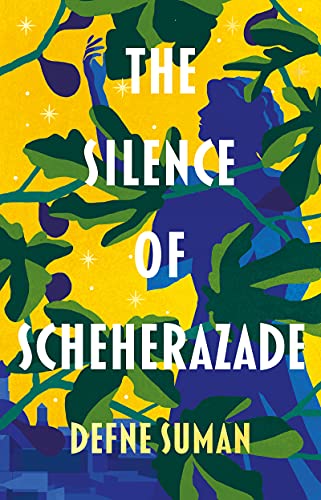
The Silence of Schererozade by Defne Suman
Set in the ancient city of Smyrna, this powerful novel follows the intertwining fates of four families as their peaceful city is ripped apart by the dissolution of the Ottoman Empire.

On an orange-tinted evening in September 1905, Scheherazade is born to an opium-dazed mother in the ancient city of Smyrna. At the very same moment, a dashing Indian spy arrives in the harbour with a secret mission from the British Empire. He sails in to golden-hued spires and minarets, scents of fig and sycamore, and the cries of street hawkers selling their wares. When he leaves, seventeen years later, it will be to the heavy smell of kerosene and smoke as the city, and its people, are engulfed in flames.

But let us not rush, for much will happen between then and now. Birth, death, romance and grief are all to come as these peaceful, cosmopolitan streets are used as bargaining chips in the wake of the First World War.

Told through the intertwining fates of a Levantine, a Greek, a Turkish and an Armenian family, this unforgettable novel reveals a city, and a culture, now lost to time.

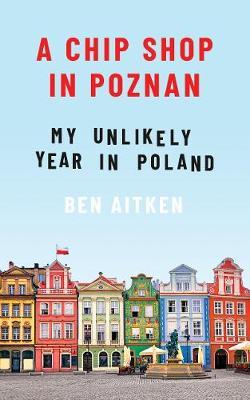
A Chip Shop in Poznań – My Unlikely Year in Poland by Ben Atkin
A Chip Shop in Poznań is author Ben Aitken’s memoir of his time working in a fish and chip shop in Poznań. Part memoir, part travelogue, A Chip Shop balances personal musings on love, attraction, and camaraderie, with heartfelt cultural impressions.

Not many Brits move to Poland to work in a fish and chip shop. Fewer still come back wanting to be a Member of the European Parliament. 

Ben Aitken moved to Poland in 2016 to understand why the Poles were leaving. He booked the cheapest flight he could find, to a place he had never heard of - Poznan. This candid, funny and off-beat book is the account of his year in Poland, as an unlikely immigrant. 

Between peeling potatoes and boning fish, Ben spent time on the road travelling the country. He missed the bus to Auschwitz; stayed with a dozen nuns near Krakow; was offered a job by a Eurosceptic farmer and went to Gdansk to learn how communism got the chop. This is a bittersweet portrait of an unsung country, challenging stereotypes that Poland is a grey, ex-soviet land, and revealing a diverse country, rightfully proud of its colourful identity.

Ben Aitken was born under Thatcher, grew to 6ft then stopped, and is an Aquarius. He was conceived by a nurse and a shipwright, grew up in Portsmouth and was in a boyband for a spell in the noughties, then worked as a carer throughout his twenties. 

Ben writes for The Guardian and The Times, was the TCG Travel Journalist of the Year in 2024, and is an occasional lecturer at the University of Portsmouth.

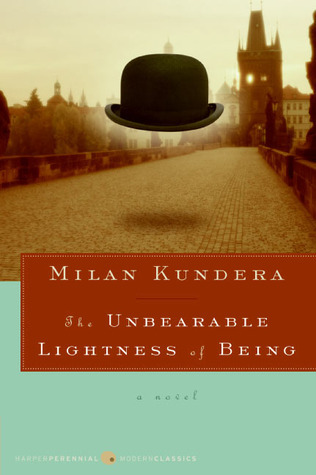
The Unbearable Lightness of Being by Milan Kundera

In The Unbearable Lightness of Being tells the story of a young woman in love with a man torn between his love for her and his incorrigible womanising and one of his mistresses and her humbly faithful lover.

This magnificent novel juxtaposes geographically distant places, brilliant and playful reflections, and a variety of styles, to take its place as perhaps the major achievement of one of the world’s truly great writers.

Wednesday, 11 June 2025

The Mercies by Kiran Millwood Hargrave

Book Group Review: The Mercies by Kiran Millwood Hargrave

Nine of us gathered to discuss The Mercies, as one member hadn’t quite finished the book, we took care to avoid spoilers. That didn’t stop our conversation from being as lively, thoughtful, and honest as always!

The novel centres on the lives of women in Vardø, a small fishing village in Northern Norway, in 1621. The community, already devastated by the loss of its menfolk in a storm, must contend with the arrival of the so-called ‘witch hunters’. The Mercies explores the horrifying real events that unfolded, telling a powerful story of resilience, injustice, and the strength of women.

At the heart of the narrative are two central characters: Maren, a local woman learning to survive in a world without men, and Ursa, the sheltered daughter of a merchant, brought to Vardø through marriage into a starkly different life. Their relationship becomes a poignant lens through which the reader experiences the events of the novel.

Our group had mixed reactions to the book.

One member stopped reading partway through, finding the subject matter too traumatic. We all respected this choice but agreed the book was worth finishing, as it faithfully reflects the real struggles and courage of women in history.

Although audiobooks are growing in popularity among us, we agreed that this particular story was best experienced through a physical copy. The descriptive writing made it easier to immerse ourselves in the setting and mood.

The story took some time to gather momentum as characters were introduced, but once it did, we found it absorbing. Reactions included:

“I couldn’t put it down.” and “It was compelling, though the cruelty was hard to bear.”

We all echoed this sentiment.

The ending proved disturbing and emotional. For some of the women, the outcome was horrific - they never stood a chance. While the story has elements of female empowerment, it also shows how easily male authority could intrude, disrupt, and destroy.

The novel is heartbreaking from the outset. Ursa’s father believes he is doing the best for her, while the captain, though kind, knows otherwise and is powerless to change her fate. One member described the book’s tone as building a “fear of dread,” reminiscent of a Joanne Harris novel.

Did the book portray women as victims? Some of us felt it didn’t. Rather, it showed their strength and heroism. A notable moment came when the Lensman’s wife said to Ursa, her Calvinist counterpart, “You must be so proud.”  We debated whether this was sincere or sarcastic, but didn’t reach a conclusion.

There was much less debate about the portrayal of the male characters. Most were roundly considered to be idiots, the captain being the main exception. We struggled to reconcile how men responsible for such horrors could claim to act in the name of God.

Members of our group who had visited Norway praised the description of the setting and said they could easily visualise the landscape. A recommendation was made to watch Simon Reeve’s travel documentary on Norway. Here’s the link for anyone interested:

🔗 Scandinavia with Simon Reeve – BBC iPlayer

Talk even turned to a possible group trip to Norway - specifically Bergen and Vardø! A bit of travel research revealed:

  • Ferry from Bergen to Vardø: every 30 minutes, journey takes about 5 days and 7 hours
  • Train from Bergen to Vardø (via Sweden and Finland): 3 days and 5 hours
  • Flight from Bergen to Kirkenes (3h 15m), then ferry to Vardø (4h 20m)

My conclusion? Visiting Vardø is certainly doable - but not simple! The distance and multiple modes of transport make it a serious adventure, requiring careful planning and consideration of cost and time.

This all gave us greater appreciation for Ursa’s journey by sea in 1617 and highlighted just how isolated Vardø was, especially for the women left vulnerable to religious persecution.

For perspective: this is the overland route from Bergen to Vardø. Vardø is now marginally less isolated as it is joined to the mainland by a tunnel and a bridge. 

A fallback idea, if Norway proves too ambitious: the Edinburgh Museum was suggested as an alternative destination for exploring the history of witch trials closer to home.

Back to the book - some members felt the ending was sudden and didn’t quite match the slower pace of the rest of the novel. Was it a happy or sad ending? We won’t spoil it, but our interpretations were mixed.

As one member put it: “This is why I come to Book Group!”

Footnote: Several of us also read The Reading List by Sara Nisha Adams and found it delightful. As a group, we’d already read many of the books it features and enjoyed revisiting them.

Would we recommend these books?

Yes - to both!

Next Meeting:

📖 The Old Ways by Robert Macfarlane

📍 The Ash Tree, Ashendon

🕗 Thursday, 24th July 2025, 8pm


Thursday, 15 May 2025

Book Choices - May 2025

Our next meeting is at 8.00pm on Thursday, 22nd May 2025, at The Ash Tree in Ashendon. We will be discussing The Mercies by Kiran Millwood Hargrave.

Here are the book choices for our next book. 

Horse by Geraldine Brooks

Based on the remarkable true story of the record-breaking thoroughbred, Lexington, who became America’s greatest stud sire, Horse is a gripping, multi-layered reckoning with the legacy of enslavement and racism in America.

Kentucky, 1850

An enslaved groom named Jarret and a bay foal forge a bond of understanding that will carry the horse to record-setting victories across the South. When the nation erupts in civil war, an itinerant young artist who has made his name on paintings of the racehorse takes up arms for the Union.

On a perilous night, he reunites with the stallion and his groom, very far from the glamour of any racetrack.

New York City, 1954

Martha Jackson, a gallery owner celebrated for taking risks on edgy contemporary painters, becomes obsessed with a nineteenth-century equestrian oil painting of mysterious provenance.

Washington, DC, 2019

Jess, a Smithsonian scientist from Australia, and Theo, a Nigerian-American art historian, find themselves unexpectedly connected through their shared interest in the horse - one studying the stallion’s bones for clues to his power and endurance, the other uncovering the lost history of the unsung Black horsemen who were critical to his racing success. 

The Old Ways by Robert Macfarlane

A journey on foot.

Robert Macfarlane travels Britain's ancient paths and discovers the secrets of our beautiful, underappreciated landscape.

Following the tracks, holloways, drove-roads and sea paths that form part of a vast ancient network of routes criss-crossing the British Isles and beyond, Robert Macfarlane discovers a lost world – a landscape of the feet and the mind, of pilgrimage and ritual, of stories and ghosts; above all, of the places and journeys which inspire and inhabit our imaginations. 

Somebody I Used to Know by Wendy Mitchell

Brave, illuminating and inspiring, Somebody I Used to Know is the first memoir ever written by someone living with dementia. What do you lose when you lose your memories? What do you value when this loss reframes how you've lived, and how you will live in the future? How do you conceive of love when you can no longer recognise those who are supposed to mean the most to you?

When she was diagnosed with dementia at the age of fifty-eight, Wendy Mitchell was confronted with the most profound questions about life and identity. She had to say goodbye to the woman she used to be all at once. Her demanding career in the NHS, her ability to drive, cook and run - the various shades of her independence - were suddenly gone.

Philosophical, profoundly moving, insightful and ultimately full of hope, Somebody I Used to Know gets to the heart of what it means to be human. A phenomenal memoir - the first of its kind - it is both a heart-rending tribute to the woman Wendy once was, and a brave affirmation of the woman dementia has seen her become.