Wednesday, 28 September 2016

The Road to Little Dribbling by Bill Bryson

“I ‘lolled’” ”I enjoyed it “  “it was a good choice”

So that’s it, we did it again, we chose another successful read – but of course we have more to say.

Let’s start with The Bryson Line. What a great idea, Mr Bryson decided to find a line and follow it. Only, we don’t think he did. We think Mr Bryson is a little self-centred and just wanted to get his name on the map AND that he may have already written the book before he put the line in. The Bryson Line was a big disappointment.  But, we still enjoyed the book.

It’s quite educational. We learned a lot. Things like the categorisation of roads in Britain. Who’d have thought it?

And, it’s true to life: people are rude in shops and having read this book we are now so much more aware of the issue. Though in Cuddington Stores they are not rude, they are lovely, so go there.

Swearing doesn’t really add any interest to a book like this. Why does an author feel the need to choose swear words and use them badly? There isn’t really a good variety of words – just a few – and he doesn’t really use them well. While we are at it, we didn’t like the tendency of an old man to muse either. On the other hand, Bill is an author who can poke fun at himself and his own country and that we enjoyed.

So, the honest truth here is that we enjoyed the book overall BUT it annoyed us too. In fact, the start is quite boring and hard to get into. If this hadn’t been a book group book it may have been put down and not picked up again. Because it was a book group read we persevered and the perseverance paid off – it got better!

For a start you find yourself realising you have been there: “Devon Torcross is where we used to go with the children every year”;  “Wittenham Woods are a Sunday favourite” , “Aberystwyth is  actually a lovely place and he over rates Crickhowell”. Just one thing though: It's The Isles of Scilly (please: they are NOT The Scilly Isles they are The Isles of Scilly. You can say Scilly but The Scillies is incorrect too - just saying).  

That said, thank you for sharing so many new places to visit and new books to read (one by Gilbert White sounds fascinating) - we need to plan some book group outings.

In conclusion we thought this book was an exceptional read packed full of things we take for granted in Britain like: nature, countryside and walks with rights of way. It took a foreigner to point this out and he’s right. Not many countries offer the same access to the open land. Even in Ireland you need to take a piece of pipe on walks so that you can put it over barbed wire fences when walking,
Would we recommend this book? Yes!

Our next read is The Girl on the Train by Paula Hawkins, which we will discuss on Thursday 17th November at The Hundred of Ashendon.


Quick Ad Break: don’t miss the Literary Festival in Thame over the weekend of 15th October. 

Monday, 12 September 2016

Book Choices - September 2016

Our next meeting will be on Thursday 22nd September when we will be discussing The Road to Little Dribbling by Bill Bryson – see you at 8pm in The Hundred.

Isalda has kindly grabbed the baton and her suggestions for our next book choice are here:

Sweet Caress by William Boyd


Amory's first memory is of her father doing a handstand. She has memories of him returning on leave during the First World War. But his absences, both actual and emotional, are what she chiefly remembers. It is her photographer uncle Greville who supplies the emotional bond she needs, and, when he gives her a camera and some rudimentary lessons in photography, unleashes a passion that will irrevocably shape her future.

A spell at boarding school ends abruptly and Amory begins an apprenticeship with Greville in London, living in his flat in Kensington, earning two pounds a week photographing socialites for fashionable magazines. But Amory is hungry for more and her search for life, love and artistic expression will take her to the demi monde of Berlin of the late 1920s, to New York of the 1930s, to the Blackshirt riots in London and to France in the Second World War where she becomes one of the first women war photographers. Her desire for experience will lead Amory to further wars, to lovers, husbands and children as she continues to pursue her dreams and battle her demons.

In this enthralling story of a life fully lived, William Boyd has created a sweeping panorama of some of the most defining moments of modern history, told through the camera lens of one unforgettable woman, Amory Clay. It is his greatest achievement to date.

The Girl On The Train by Paula Hawkins


Rachel catches the same commuter train every morning. She knows it will wait at the same signal each time, overlooking a row of back gardens. She’s even started to feel like she knows the people who live in one of the houses. ‘Jess and Jason’, she calls them. Their life – as she sees it – is perfect. If only Rachel could be that happy.

And then she sees something shocking. It’s only a minute until the train moves on, but it’s enough. 

Now everything’s changed. Now Rachel has a chance to become a part of the lives she’s only watched from afar.

Now they’ll see; she’s much more than just the girl on the train…

Do No Harm by Henry Marsh


What is it like to be a brain surgeon?

How does it feel to hold someone's life in your hands, to cut through the stuff that creates thought, feeling and reason?
How do you live with the consequences when it all goes wrong?
DO NO HARM offers an unforgettable insight into the highs and lows of a life dedicated to operating on the human brain, in all its exquisite complexity. With astonishing candour and compassion, Henry Marsh reveals the exhilarating drama of surgery, the chaos and confusion of a busy modern hospital, and above all the need for hope when faced with life's most agonising decisions.


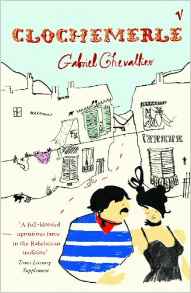
Clochemerle by Gabriel Chevallier

This is a vintage classic book, first published in Great Britain in 1936. It was originally written in French. It has been continually in print since 1936. Though not quite on par with Lady Chatterley's lover it is quite 'racy' and 'base' at times and surprisingly so for its time.

The story is of a French village in the Beaujolais wine region and complexity of living the simple life in a community centred around wine production!

Some of us enjoyed the Windmill Players stage performance of the story of Clochemerle and were quite surprised at the depth of the story in the book. In fact most of our group felt the book had taken longer to read then anticipated. The sentences are long, convoluted and very 'rich'. This is a book to read in small chunks and to be savoured. Our French member confirmed that this is the same in the French language version.

The underlying tone is satirical. We have a Frenchman poking fun at his fellow countrymen, and it is brilliantly witty and very funny. The outrageous behaviours of the church, the administration, the wartime military, the 'aristocracy' are carefully interlaced with the culture and traditions of ordinary small town/big village country folk.

We (inevitably as an all female group) got on to the subject of feminism and quickly concluded that we actually really enjoyed the scandalous way Gabriel wrote about the women of the village. This is irony, it's not supposed to be 'politically' correct!

So of the characters, the behaviour of two 'neighbourly' priests was, we felt, a 'hoot' and the stand off between the Contessa and Taridot is a perfect example of the way the author ridicules the establishment (in this example the class divide). The story is so full of brilliantly observed characterisation that it is impossible to single out any one person or incident.

We briefly considered whether English life at the same time bore any similarities. Yes, of course it probably compares on a rural community lifestyle perspective but the revolutionary undertones of the French culture has a style all of its own - when it comes to deference, the English do it and the French do not!

Would we recommend it? Yes, it's hard work but it's a very worthwhile read. We should challenge ourselves more often with our reading and so, we were pleased this book was suggested. So, on that basis we will 'suggest' it to others.

Our next book is The Road to Little Dribbling by Bill Bryson and we will discuss that when we next meet in The Hundred of Ashendon on Thursday 22nd September. 

Sunday, 17 July 2016

Next book

Sorry I didn't get the last group review done and I don't have notes with me. The next book is Bill Bryson Road to Little Dribbling - I'll sort the rest when I'm back from my holidays w.c 25th July 

Sunday, 10 July 2016

Book Choices - July 2016

I totally admit it has crept up on me and it's tomorrow that we will be meeting to discuss Clochemerle AND (if you have manged it) Clochemerle Babylon, by Gabriel Chevallier. We are meeting at 8pm in Sue's garden (or conservatory) to discuss these books and celebrate the Summer.

Our book choices for the next great read are below:

The Road to Little Dribbling by Bill Bryson

Twenty years ago, Bill Bryson went on a trip around Britain to celebrate the green and kindly island that had become his adopted country. The hilarious book that resulted: Notes from a Small Island, was taken to the nation's heart and became the bestselling travel book ever, and was also voted in a BBC poll the book that best represents Britain. 

To mark the twentieth anniversary of that modern classic, Bryson makes a brand-new journey round Britain to see what has changed. Following (but not too closely) a route he dubs the Bryson Line, from Bognor Regis to Cape Wrath, by way of places that many people never get to at all, Bryson sets out to rediscover the wondrously beautiful, magnificently eccentric, endearingly unique country that he thought he knew but doesn't altogether recognize any more. Yet, despite Britain's occasional failings and more or less eternal bewilderments, Bill Bryson is still pleased to call our rainy island - Home. And not just because of the cream teas, a noble history, and an extra day off at Christmas. Once again, with his matchless homing instinct for the funniest and quirkiest, his unerring eye for the idiotic, the endearing, the ridiculous and the scandalous, Bryson gives us an acute and perceptive insight into all that is best and worst about Britain today.


Look Who's Back by Timur Vermes and Jamie Bulloch

Berlin, Summer 2011. Adolf Hitler wakes up on a patch of open ground, alive and well. Things have changed - no Eva Braun, no Nazi party, no war. Hitler barely recognises his beloved Fatherland, filled with immigrants and run by a woman.
People certainly recognise him, albeit as a flawless impersonator who refuses to break character. The unthinkable, the inevitable happens, and the ranting Hitler goes viral, becomes a YouTube star, gets his own T.V. show, and people begin to listen. But the Führer has another programme with even greater ambition - to set the country he finds a shambles back to rights.
Look Who's Back stunned and then thrilled 1.5 million German readers with its fearless approach to the most taboo of subjects. Naive yet insightful, repellent yet strangely sympathetic, the revived Hitler unquestionably has a spring in his step.


The Language of Flowers by Vanessa Diffenbaugh

The Victorian language of flowers was used to express emotions: honeysuckle for devotion, azaleas for passion, and red roses for love. But for Victoria Jones, it has been more useful in communicating feelings like grief, mistrust and solitude. After a childhood spent in the foster care system, she is unable to get close to anybody, and her only connection to the world is through flowers and their meanings.
Now eighteen, Victoria has nowhere to go, and sleeps in a public park, where she plants a small garden of her own. When her talent is discovered by a local florist, she discovers her gift for helping others through the flowers she chooses for them. But it takes meeting a mysterious vendor at the flower market for her to realise what's been missing in her own life, and as she starts to fall for him, she's forced to confront a painful secret from her past, and decide whether it's worth risking everything for a second chance at happiness.
The Language of Flowers is a heartbreaking and redemptive novel from author Vanessa Diffenbaugh, about the meaning of flowers, the meaning of family, and the meaning of love.


Monday, 23 May 2016

The Help by Kathryn Stockett

Six of us enjoyed a surprisingly extended chat about a novel that tells the story of African-American maids in white households during the 1960's. Day to day these ladies went about their work with a professional pride. By night they took the opportunity to quietly tell their stories in a book crafted by a young white journalist who had herself known and loved her childhood maid. The book is set at the time of Civil Rights activism that helped to shape a different future for women like Aibileen, Minny, Yule Mae and their families. 

The book had to work hard for our affections. Not everyone found it an easy read, some of us were able to put it down, we hadn't all got to the end in time for book group. For others it was a page turner. So the comments bounced around between us. 

"I loved the different voices" "I felt like an outsider" "I read for hours and hours, I couldn't put it down" "I wasn't absorbed by it" and so on. All that said, everyone found this a very good book and an exceptional story. 

The white women were pretty awful, but times were changing and characters like Skeeter (the determined young white journalist) and Celia (a troubled, innocent,  'white trash' social misfit) were able to make things a little bit different. We loved them for it. 

Of the characters, we thought Hilly was particularly despicable whereas Jonny and Celia were lovely. Skeeter was before her time and definately her father's daughter. 

Our conversation moved on to the real names that feature in the book - Emmett Till and Medgar Evers - who were part of the story of the Civil Rights journey in Mississippi. Oh and today was Malcolm X day so he got a mention too.

Inevitably one of our other recent reads - Fried Green Tomatoes - was compared to The Help (they both focus on Civil Rights). The Help we thought was more political and reflected on 'the time' rather than being 'in the time.'

We enjoyed being able to 'hear' the accents as we read. We loved the relationship between Aibileen and Minny who were women of different ages and mutually supportive of each others' hard circumstances. We disliked the small mindedness and snobbery of the middle classed women. 

The most memorable line in the book simultaneously recalled by two of us "I know how to stop the teapot lid from rattling". 

As we continued deep into the evening picking up on bits of the story, lines, characters, occurrences it became clear that this book had left its mark on us all. We did all enjoy it, we do all recommend it. So, despite the mixed response this was in fact an enjoyable, thought provoking, read that we all liked very much. 

For the next couple of months we will be reading Clochemerle AND Clochemerle Babylon, both by Gabriel Chevallier and we will meet on MONDAY 11th July at 8pm in Sue's garden (or conservatory) to discuss these books and celebrate the Summer. Let's hope its a sunny evening and a date we can all make. 

Monday, 16 May 2016

Book Choices - May 2016

Our next meeting will be on Thursday 19th May 2016 at 8pm in The Hundred of Ashendon when we will be discussing The Help by Kathryn Stockett. 


Life and Death in Shanghai by Nien Chang

A first-hand account of China's cultural revolution. Nien Cheng, an anglophile and fluent English-speaker who worked for Shell in Shanghai under Mao, was put under house arrest by Red Guards in 1966 and subsequently jailed. All attempts to make her confess to the charges of being a British spy failed; all efforts to indoctrinate her were met by a steadfast and fearless refusal to accept the terms offered by her interrogators. When she was released from prison she was told that her daughter had committed suicide. In fact Meiping had been beaten to death by Maoist revolutionaries


Clochemerle by Gabriel Chevallier 

Gabriel Chevallier's delightful novel Clochemerle satirizes the titanic confrontation of secular and religious forces in a small wine-growing village in Beaujolais. The eruption begins when the socialist mayor decides that he wants to leave behind a monument to his administration's achievements. He takes as his model the ancient Romans, who were famous for two things: hygiene and noble edifices. Thus, he decides to unite the two concepts...by constructing a public urinal in the centre of town. There is one problem, however. The chosen locale is next to the village church, and this outrages the ecclesiastical party.


Alternative/Optional Follow on: Clochemerle-Babylon


The Ghost Road by Pat Barker

1918, the closing months of the war. Army psychiatrist William Rivers is increasingly concerned for the men who have been in his care - particularly Billy Prior, who is about to return to combat in France with young poet Wilfred Owen. As Rivers tries to make sense of what, if anything, he has done to help these injured men, Prior and Owen await the final battles in a war that has decimated a generation ... The Ghost Road is the Booker Prize-winning account of the devastating final months of the First World War.