Monday, 19 January 2026

Book Choices to Kick Off 2026


We will meet on Thursday, 22nd January, 8pm at Isalda's home in Brill, to discuss 'A Gentleman in Moscow' by Amor Towles.

Isalda has put directions on the Ashendon Book Group WhatsApp Group.

Here's the choices for our next read:

That Bonesetter Woman by Frances Quinn

It’s usual, they say, for a young person coming to London for the first time to arrive with a head full of dreams. Well, Endurance Proudfoot did not. When she stepped off the coach from Sussex, on a warm and sticky afternoon in the summer of 1757, it never occurred to her that the city would be the place where she’d make her fortune; she was just very annoyed to be arriving there at all.

Meet Endurance Proudfoot: clumsy as a carthorse, strong as an ox, with a tactless tongue and a face she’s sure only a mother could love. Durie wants one thing in life: to become a bonesetter like her father. It’s physically demanding work, requiring nerves of steel, and he’s adamant it’s not a job for a woman.

Strong-willed and stubborn, Durie’s certain that in bonesetting, her big, usually clumsy hands have found their natural calling. So when she’s bundled off to London with her beautiful sister, she won’t let it stop her from realising her dream. As her sister finds fame on the stage, Durie becomes England’s most celebrated bonesetter – but what goes up must come down, and her success may become her undoing.

Inspired by the true stories of two of Georgian England’s most famous celebrities, That Bonesetter Woman is an uplifting tale about finding the courage to go your own way, when everyone says you can’t – and about realising that what makes you different can also make you strong.


Paris Echo by Sebastian Faulks

Here is Paris as you have never seen it before – a city in which every building seems to hold the echo of an unacknowledged past, the shadows of Vichy and Algeria.

American postdoctoral researcher Hannah and a runaway Moroccan teenager Tariq have little in common, yet both are susceptible to the daylight ghosts of Paris. Hannah listens to the extraordinary witness of women who were present during the German Occupation; in her desire to understand their lives and through them her own, she finds a city bursting with clues and connections. Out in the migrant suburbs, Tariq is searching for a mother he barely knew. For him, in his innocence, each boulevard, Métro station and street corner is a source of surprise.

In this urgent and deeply moving novel, Faulks deals with questions of empire, grievance, and identity. With great originality and dark humour, Paris Echo asks how much we really need to know if we are to live a valuable life.


The Cat and The City by Nick Bradley

In Tokyo – one of the world’s largest megacities – a stray cat is wending her way through the back alleys. And, with each detour, she brushes up against the seemingly disparate lives of the city-dwellers, connecting them in unexpected ways.

But the city is changing. As it does, it pushes her to the margins where she chances upon a series of apparent strangers – from a homeless man squatting in an abandoned hotel, to a shut-in hermit afraid to leave his house, to a convenience store worker searching for love. The cat orbits Tokyo’s denizens, drawing them ever closer.


Monday, 17 November 2025

Book Choices to Close 2025

We will meet on Thursday, 20th November, 8pm at The Ash Tree, Ashendon, to discuss 'The Art of The Lie' by Laura Shepherd-Robinson.

Here are the choices for our next read: 

Femina by Janina Ramirez

Giving voice to the influential women of the Middle Ages who have been silenced by male gatekeepers, Ramirez's sweeping account not only highlights unjustly forgotten pioneers but also demonstrates how easily historical narratives can be manipulated.

The Middle Ages are seen as a bloodthirsty time of Vikings, saints and kings: a patriarchal society which oppressed and excluded women. But when we dig a little deeper into the truth, we can see that the 'dark' ages were anything but. 

Oxford and BBC historian Janina Ramirez has uncovered countless influential women's names struck out of historical records, with the word FEMINA annotated beside them. As gatekeepers of the past ordered books to be burnt, artworks to be destroyed, and new versions of myths, legends and historical documents to be produced, our view of history has been manipulated.

Only now, through a careful examination of the artefacts, writings and possessions they left behind, are the influential and multifaceted lives of women emerging. Femina goes beyond the official records to uncover the true impact of women like Jadwiga, the only female King in Europe, Margery Kempe, who exploited her image and story to ensure her notoriety, and the Loftus Princess, whose existence gives us clues about the beginnings of Christianity in England. See the medieval world with fresh eyes and discover why these remarkable women were removed from our collective memories.                               


In All Day Long by Joanna Biggs

The average person spends 100,000 hours of their life at work, but how much do we really know about what we do with it? What is it really like to work in advertising, to be a train driver, a sex worker or an orthodox rabbi? What do we do in our working hours, and how does that colour our life, beliefs and happiness? And what happens to how we feel about work in a recession?

Joanna Biggs finds the answers to these questions and more by talking to the interns and bosses, professionals and entrepreneurs, and thinkers and doers who make up the workforce. Her journey takes us from Parliament to the long grassed fields of the Outer Hebrides, from a hospital in Wales to the wings of the Royal Opera House, introducing us to the different worlds of work and the people who inhabit them.

Full of human detail and street-level observation, Joanna Biggs' writing combines genuine empathy with social, cultural and political awareness. Like Studs Terkel's classic book 'Working' did several decades ago in America, her book paints a portrait of the UK right now, showing us who we are through what we do.


A Gentleman in Moscow by Amor Towles


In 1922, Count Alexander Rostov — an aristocrat who has never worked a day in his life — is sentenced by a Bolshevik tribunal to house arrest in Moscow’s grand Metropol Hotel. Instead of being executed or exiled like many of his peers, he must live out his days in a tiny attic room, forbidden ever to step outside.

What follows is a beautifully written, warm, and often humorous story about how a man stripped of his freedom learns to build a full and meaningful life within 4 walls. Over the decades, the Count forms deep friendships with the hotel staff, a precocious young girl, and unexpected companions who challenge and enrich him. Through dinners, conversations, small adventures and changing political tides, he discovers that purpose and joy can be found even in confinement.

The novel is elegant, charming and full of wit — but also explores big themes: dignity, resilience, history, friendship, love, and what it means to live a good life amid upheaval.


A Chip Shop in Poznan by Ben Aitken

Seven of us gathered to discuss A Chip Shop in Poznań, and the short verdict was that this was not a well-liked read. For a renowned travel writer, Aitken’s approach felt surprisingly low-effort - more like a diary with footnotes than a fully developed travel narrative. Many of us were disappointed by its lack of depth and structure.

A particular sticking point was the book’s tone, which often came across as laddish and immature. While we appreciated, thanks to two members with first-hand experience of Poland, that alcohol is genuinely woven into aspects of Polish social life, we didn’t feel we needed to read our way through what seemed like a year of drinking and drunkenness. 

However, the evening’s conversation proved much richer than the book itself. Our “insiders” were able to confirm many incidental details. One of us had enjoyed the family wedding where food, vodka, food, games, more drink, more food, dancing (and so on) flowed throughout. Another visited Poland and shared a menu that, again, illustrated the importance of food and vodka! Most notably, we were assured that the Polish language is indeed notoriously difficult to learn, breaking the spirits of even the most enthusiastic linguists! Their insights brought humour and authenticity to our discussion, helping us appreciate the cultural fragments Aitken touched on.

Our chat then broadened into a lively and imaginative debate about where we might choose to live and work for a year. Poland didn’t make the list, but Italy gathered three votes, France one, and India one. We concluded that the idea of immersing oneself in a new place, with the intention of challenging one’s mindset and engaging wholeheartedly with local people, was very appealing. From there, we wandered into conversations about experiences in Russia and the Baltics, and somehow, in true book group fashion, this led us on to a lively chat about travel, languages, and even plastic!

As for whether we’d recommend A Chip Shop in Poznań: sorry, Ben, not really. It simply didn’t resonate with most of us. However, in the interest of balance, having read your other books, one of our group spoke highly of them and recommended we give The Marmalade Diaries and The Gran Tour a try.

That said, there were elements we admired. We were genuinely impressed by Aitken’s ability to be warmly welcomed into situations and homes by people he had never met before. His use of football as an icebreaker was spot-on and a reminder of how shared passions can transcend language barriers. And we found it interesting to learn how Poland had effectively been “put on the moon” for many years, and must have had a huge influence on the cultural and historical context encountered.

In the end, while the book may not have won us over, it certainly prompted a thoughtful, entertaining, and wide-ranging discussion. And sometimes, that’s the unexpected gift of a less-than-perfect read.

Thursday, 18 September 2025

Book Choices for Autumn 2025

We will meet on Thursday 25th September, 8pm at The Ash Tree, Ashendon, to discuss 'A Chip Shop in Poznań' by Ben Aitken. 

Here are the choices for our next read:

My Journey to Lhasa by Alexandra David–Néel

The classic story of the only Western woman who succeeded in entering the Forbidden City.

An exemplary travelogue of danger and achievement by the Frenchwoman Madame Alexandra David–Néel of her 1923 expedition to Tibet, the fifth in her series of Asian travels, and her personal recounting of her journey to Lhasa, Tibet's forbidden city.

To penetrate Tibet and reach Lhasa, she used her fluency in Tibetan dialects and culture, disguised herself as a beggar with yak hair extensions and inked skin and tackled some of the roughest terrain and climate in the World. With the help of her young companion, Yongden, she willingly suffered the primitive travel conditions, frequent outbreaks of disease, the ever–present danger of border control and the military to reach her goal.

The determination and sheer physical fortitude it took for this woman, delicately reared in Paris and Brussels, is an inspiration for men and women alike.

David-Neel is famous for being the first Western woman to have been received by any Dalai Lama, and as a passionate scholar and explorer of Asia, hers is one of the most remarkable of all travellers' tales.

The Art of A Lie by Laura Shepherd-Robinson

In 18th-century England, a widowed confectioner is drawn into a web of love, betrayal, intrigue and a battle of wits.

Following the murder of her husband in what looks like a violent street robbery, Hannah Cole is struggling to keep her head above water. Her confectionery shop on Piccadilly is barely turning a profit, and her suppliers are conspiring to put her out of business because they don’t like women in trade. 

Henry Fielding, the famous author-turned-magistrate, is threatening to confiscate the money in her husband’s bank account because he believes it might have been illicitly acquired. And even those who claim to be Hannah’s friends have darker intent.

Only William Devereux seems different. A friend of her late husband, Devereux helps Hannah unravel some of the mysteries surrounding his death. He also tells her about an Italian delicacy called 'iced cream'; an innovation she is convinced will transform the fortunes of her shop. But their friendship opens Hannah to speculation and gossip and draws Henry Fielding’s attention her way, locking her into a battle of wits more devastating than anything she can imagine.

Educated By Tara Westover

Tara Westover was 17 the first time she set foot in a classroom. Born to survivalists in the mountains of Idaho, she prepared for the end of the world by stockpiling home-canned peaches and sleeping with her "head-for-the-hills bag". In the summer, she stewed herbs for her mother, a midwife and healer, and in the winter, she salvaged in her father's junkyard.

Her father forbade hospitals, so Tara never saw a doctor or nurse. Gashes and concussions, even burns from explosions, were all treated at home with herbalism. The family was so isolated from mainstream society that there was no one to ensure the children received an education and no one to intervene when one of Tara's older brothers became violent.

Then, lacking any formal education, Tara began to educate herself. She taught herself enough mathematics and grammar to be admitted to Brigham Young University, where she studied history, learning for the first time about important world events like the Holocaust and the civil rights movement. Her quest for knowledge transformed her, taking her over oceans and across continents, to Harvard and to Cambridge. Only then would she wonder if she'd travelled too far, if there was still a way home.

Educated is an account of the struggle for self-invention. It is a tale of fierce family loyalty and of the grief that comes with severing the closest of ties. With the acute insight that distinguishes all great writers, Westover has crafted a universal coming-of-age story that gets to the heart of what an education is and what it offers: the perspective to see one's life through new eyes and the will to change it.


Tuesday, 29 July 2025

The Old Ways by Robert Macfarlane

Eight of us gathered to discuss The Old Ways, Robert Macfarlane’s memoir of journeys taken on foot. All of us read the physical book rather than listening to the audiobook, though by the end of our discussion, we wondered whether the audio format might actually suit this reflective, poetic style well.

Several members who couldn’t attend the meeting had already shared their thoughts. They admitted to finding it hard to “get into” at first — it wasn't their usual kind of read — but once immersed, they found it both enjoyable and thought-provoking. Those sentiments echoed around the table: the book’s subject matter was different from what many of us typically choose, but its lyrical prose and the depth of thought won most of us over.

As always, a few members were especially enthusiastic — perhaps unsurprisingly, those who enjoy long-distance walking and are drawn to adventure. They raved about the content, the vivid imagery, and the sense of connection with nature and landscape that Macfarlane evokes.

We all agreed on one thing: Robert Macfarlane must be a difficult person to live with! His frequent, extended walking trips — often to remote or obscure parts of the world — seem far from your average holiday. It became clear to us that the book is a compilation built by Macfarlane over time. Some felt it read more like a series of essays than a continuous narrative, and this structure was both a strength and a challenge.

Several of us noted that the book doesn’t need to be read in order. It lends itself well to being dipped in and out of, choosing chapters or journeys that catch your interest. One member confessed to stopping at page 80, deciding that "life’s too short." Three others felt the same — but by the end of our conversation, some were inspired to give the book another try, at their own pace.

There was also strong appreciation from others for the book’s poetic writing, the richly drawn characters Macfarlane encounters, and the philosophical depth woven through his descriptions. One member summed it up perfectly: “It’s about what I do.” That personal connection brought the book to life for them.

The people Macfarlane meets deserve special mention — from the man with the box library, to the skeleton artist, to the Tibetan walkers. These encounters enrich the narrative and make the journey worthwhile.

If you are a keen walker, curious explorer, or someone who seeks meaning in the paths you travel, this book is likely to resonate deeply. It explores the art and spiritual value of walking — the time to think, the physical and mental benefits, and the simple human pace at which life can be best understood. Philosophers walked. So should we.

We particularly enjoyed the chapters on “Sea Ways” and reflected on the Foulness walk. Though fascinating, it was also seen as risky — wandering onto estuary mudflats was perhaps a little reckless! On a more familiar note, the sections on Uffington Castle and the White Horse stood out to us living near the Oxfordshire border. Many of us had visited these sites and could relate closely to Macfarlane’s vivid descriptions.

Our conclusion? The Old Ways is a beautifully written book, rich in imagery and ideas, ideal for readers who connect with walking, landscapes, and journeys. However, it may not be the best choice for a structured book group — the kind of book that benefits from being read slowly, without pressure, and in no particular order. Pick it up when you feel like it; read a chapter while drying your hair or soaking in the bath. Savour it rather than powering through.

One lovely outcome of our meeting was a renewed interest in the artist Eric Ravilious, who is mentioned in the book. Raised in Sussex, he painted stunning watercolours of the South Downs and chalk landscapes, and is often described as “a man of the Downs.” One member discovered that the Higgins Museum in Bedford houses one of his prized works — possibly a future Book Group outing? A bit further afield, the Towner Eastbourne features a dedicated Ravilious Gallery and Collection Library, including changing exhibitions and research materials.

Would we recommend The Old Ways?
Some of us definitely would — but we all agreed it’s not ideal for a typical book group. It’s best enjoyed at your own pace, without a deadline. Let it live by the bed, in the bathroom, or on your walking rucksack — and read it when the mood strikes.

We will be meeting on 25th September, 8pm at The Ash Tree in Ashendon to discuss what we feel will be a very different, more light-hearted read: A Chip Shop in Poznań by Ben Aitken. 

Sunday, 20 July 2025

Book Choices for Late Summer 2025

We will meet on Thursday 23rd July, 8pm at The Ash Tree, Ashendon to discuss The Old Ways by Robert McFarlane.

Here are the choices for our next read:

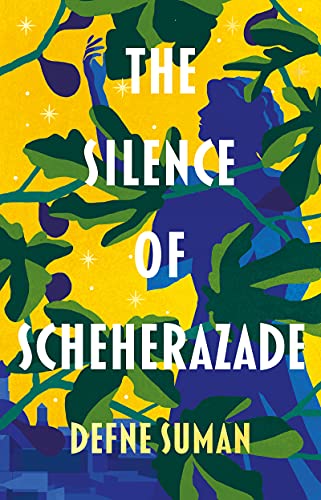
The Silence of Schererozade by Defne Suman
Set in the ancient city of Smyrna, this powerful novel follows the intertwining fates of four families as their peaceful city is ripped apart by the dissolution of the Ottoman Empire.

On an orange-tinted evening in September 1905, Scheherazade is born to an opium-dazed mother in the ancient city of Smyrna. At the very same moment, a dashing Indian spy arrives in the harbour with a secret mission from the British Empire. He sails in to golden-hued spires and minarets, scents of fig and sycamore, and the cries of street hawkers selling their wares. When he leaves, seventeen years later, it will be to the heavy smell of kerosene and smoke as the city, and its people, are engulfed in flames.

But let us not rush, for much will happen between then and now. Birth, death, romance and grief are all to come as these peaceful, cosmopolitan streets are used as bargaining chips in the wake of the First World War.

Told through the intertwining fates of a Levantine, a Greek, a Turkish and an Armenian family, this unforgettable novel reveals a city, and a culture, now lost to time.

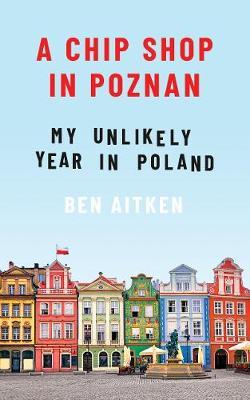
A Chip Shop in Poznań – My Unlikely Year in Poland by Ben Atkin
A Chip Shop in Poznań is author Ben Aitken’s memoir of his time working in a fish and chip shop in Poznań. Part memoir, part travelogue, A Chip Shop balances personal musings on love, attraction, and camaraderie, with heartfelt cultural impressions.

Not many Brits move to Poland to work in a fish and chip shop. Fewer still come back wanting to be a Member of the European Parliament. 

Ben Aitken moved to Poland in 2016 to understand why the Poles were leaving. He booked the cheapest flight he could find, to a place he had never heard of - Poznan. This candid, funny and off-beat book is the account of his year in Poland, as an unlikely immigrant. 

Between peeling potatoes and boning fish, Ben spent time on the road travelling the country. He missed the bus to Auschwitz; stayed with a dozen nuns near Krakow; was offered a job by a Eurosceptic farmer and went to Gdansk to learn how communism got the chop. This is a bittersweet portrait of an unsung country, challenging stereotypes that Poland is a grey, ex-soviet land, and revealing a diverse country, rightfully proud of its colourful identity.

Ben Aitken was born under Thatcher, grew to 6ft then stopped, and is an Aquarius. He was conceived by a nurse and a shipwright, grew up in Portsmouth and was in a boyband for a spell in the noughties, then worked as a carer throughout his twenties. 

Ben writes for The Guardian and The Times, was the TCG Travel Journalist of the Year in 2024, and is an occasional lecturer at the University of Portsmouth.

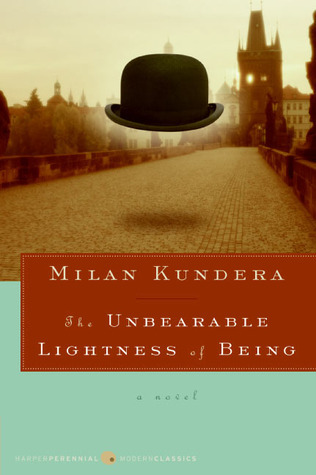
The Unbearable Lightness of Being by Milan Kundera

In The Unbearable Lightness of Being tells the story of a young woman in love with a man torn between his love for her and his incorrigible womanising and one of his mistresses and her humbly faithful lover.

This magnificent novel juxtaposes geographically distant places, brilliant and playful reflections, and a variety of styles, to take its place as perhaps the major achievement of one of the world’s truly great writers.

Wednesday, 11 June 2025

The Mercies by Kiran Millwood Hargrave

Book Group Review: The Mercies by Kiran Millwood Hargrave

Nine of us gathered to discuss The Mercies, as one member hadn’t quite finished the book, we took care to avoid spoilers. That didn’t stop our conversation from being as lively, thoughtful, and honest as always!

The novel centres on the lives of women in Vardø, a small fishing village in Northern Norway, in 1621. The community, already devastated by the loss of its menfolk in a storm, must contend with the arrival of the so-called ‘witch hunters’. The Mercies explores the horrifying real events that unfolded, telling a powerful story of resilience, injustice, and the strength of women.

At the heart of the narrative are two central characters: Maren, a local woman learning to survive in a world without men, and Ursa, the sheltered daughter of a merchant, brought to Vardø through marriage into a starkly different life. Their relationship becomes a poignant lens through which the reader experiences the events of the novel.

Our group had mixed reactions to the book.

One member stopped reading partway through, finding the subject matter too traumatic. We all respected this choice but agreed the book was worth finishing, as it faithfully reflects the real struggles and courage of women in history.

Although audiobooks are growing in popularity among us, we agreed that this particular story was best experienced through a physical copy. The descriptive writing made it easier to immerse ourselves in the setting and mood.

The story took some time to gather momentum as characters were introduced, but once it did, we found it absorbing. Reactions included:

“I couldn’t put it down.” and “It was compelling, though the cruelty was hard to bear.”

We all echoed this sentiment.

The ending proved disturbing and emotional. For some of the women, the outcome was horrific - they never stood a chance. While the story has elements of female empowerment, it also shows how easily male authority could intrude, disrupt, and destroy.

The novel is heartbreaking from the outset. Ursa’s father believes he is doing the best for her, while the captain, though kind, knows otherwise and is powerless to change her fate. One member described the book’s tone as building a “fear of dread,” reminiscent of a Joanne Harris novel.

Did the book portray women as victims? Some of us felt it didn’t. Rather, it showed their strength and heroism. A notable moment came when the Lensman’s wife said to Ursa, her Calvinist counterpart, “You must be so proud.”  We debated whether this was sincere or sarcastic, but didn’t reach a conclusion.

There was much less debate about the portrayal of the male characters. Most were roundly considered to be idiots, the captain being the main exception. We struggled to reconcile how men responsible for such horrors could claim to act in the name of God.

Members of our group who had visited Norway praised the description of the setting and said they could easily visualise the landscape. A recommendation was made to watch Simon Reeve’s travel documentary on Norway. Here’s the link for anyone interested:

🔗 Scandinavia with Simon Reeve – BBC iPlayer

Talk even turned to a possible group trip to Norway - specifically Bergen and Vardø! A bit of travel research revealed:

  • Ferry from Bergen to Vardø: every 30 minutes, journey takes about 5 days and 7 hours
  • Train from Bergen to Vardø (via Sweden and Finland): 3 days and 5 hours
  • Flight from Bergen to Kirkenes (3h 15m), then ferry to Vardø (4h 20m)

My conclusion? Visiting Vardø is certainly doable - but not simple! The distance and multiple modes of transport make it a serious adventure, requiring careful planning and consideration of cost and time.

This all gave us greater appreciation for Ursa’s journey by sea in 1617 and highlighted just how isolated Vardø was, especially for the women left vulnerable to religious persecution.

For perspective: this is the overland route from Bergen to Vardø. Vardø is now marginally less isolated as it is joined to the mainland by a tunnel and a bridge. 

A fallback idea, if Norway proves too ambitious: the Edinburgh Museum was suggested as an alternative destination for exploring the history of witch trials closer to home.

Back to the book - some members felt the ending was sudden and didn’t quite match the slower pace of the rest of the novel. Was it a happy or sad ending? We won’t spoil it, but our interpretations were mixed.

As one member put it: “This is why I come to Book Group!”

Footnote: Several of us also read The Reading List by Sara Nisha Adams and found it delightful. As a group, we’d already read many of the books it features and enjoyed revisiting them.

Would we recommend these books?

Yes - to both!

Next Meeting:

📖 The Old Ways by Robert Macfarlane

📍 The Ash Tree, Ashendon

🕗 Thursday, 24th July 2025, 8pm